
Build Your Dream Stone Outdoor Kitchen in Atlanta
Atlanta gives you something most cities don’t — close to ten months of outdoor cooking weather. A stone outdoor kitchen turns your backyard into the room your family actually uses.
This page covers how we design, choose materials for, and install stone outdoor kitchens on Atlanta properties. We’ve built these across the metro area for over a decade. If you want to start planning, schedule a site visit with our team at Legacy Stonescapes and we’ll look at your space together.
Natural Stone Holds Up Best in Atlanta’s Heat and Rain
We get this question a lot: stone, brick, or manufactured panels? For outdoor kitchens in Atlanta, natural stone wins.
Why Stone Outperforms Other Materials Here
- Temperature swings: Atlanta throws 95°F days, sideways rain, and occasional ice storms at your backyard. Manufactured materials crack under those swings.
- Humidity: Our subtropical humidity pushes mold onto porous surfaces fast. Dense stone like granite or fieldstone resists that moisture.
- Mold resistance: We've seen kitchens built with the wrong materials turn green in one summer. Stone stays cleaner with less effort.
- Longevity: When we hand you the finished kitchen, we want it to look the same in ten years. Stone does that here.
⚠️ Quick test: If a contractor suggests manufactured veneer panels for an Atlanta outdoor kitchen, ask how those panels hold up after two Georgia summers. The answer tells you a lot.
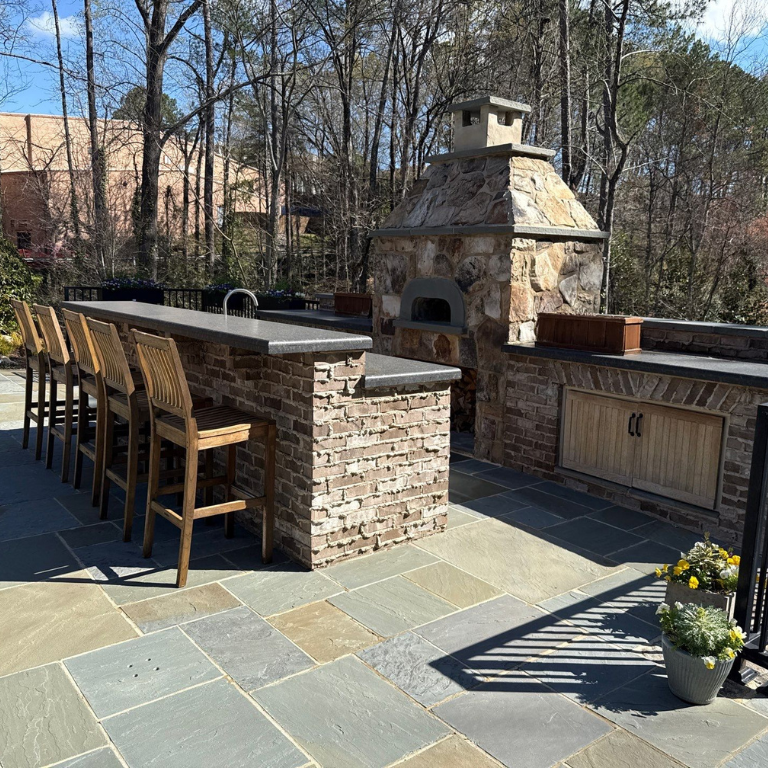
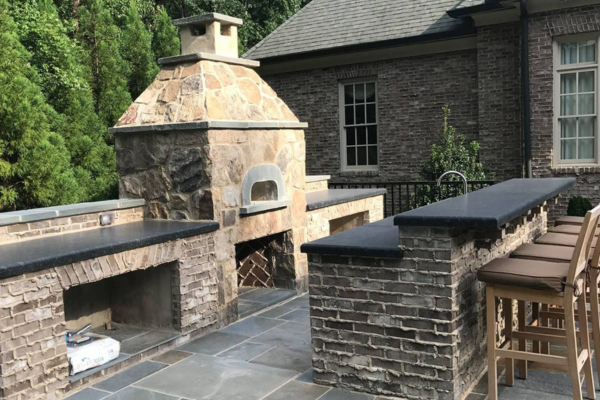
Granite Countertops Give Atlanta Outdoor Kitchens a Polished Look
If you entertain a lot — and in neighborhoods like Buckhead and Druid Hills, that’s practically a weekend requirement — granite countertops make your life easier.
Why Granite Works for Atlanta Entertaining
- Heat performance: Stays cool under shade on hot days.
- Stain resistance: Won't stain from a spilled marinade.
- Easy cleanup: Cleanup after a cookout takes minutes.
- Direct heat safe: You can pull a cast iron skillet off the grill and set it right on the counter. Try that with tile and you'll be shopping for a replacement.
🌿 Pollen tip for Atlanta homeowners: Lighter countertop surfaces show every grain of pollen during our brutal spring allergy season. We often steer clients toward darker granite tones because they hide that yellow-green buildup between cleanings. A small choice that saves real frustration from March through May.
The Right Layout Keeps Cooking and Entertaining Separate
This is where we see homeowners make their biggest mistakes. They pick beautiful stone and then put it in a layout that doesn’t work for how they actually cook and host.
Your outdoor kitchen needs two clear zones: one for cooking and prep, one for guests. When those overlap, you end up reaching past someone’s drink to grab tongs off a 500-degree grill.
Layout Options by Yard Size
We measure your lot during the site visit and recommend the layout that gives you the most function from the space you have.
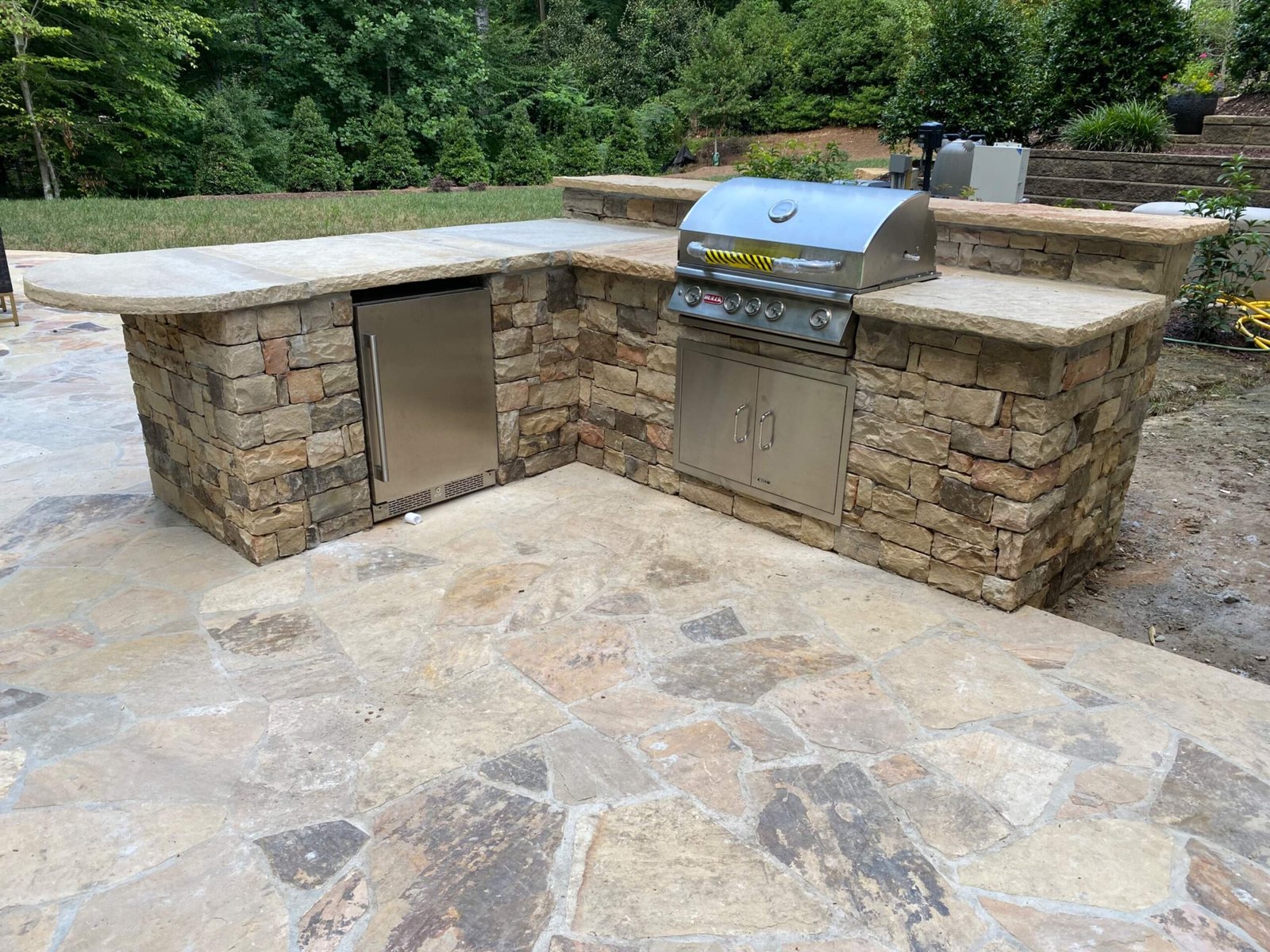
Site Prep and Footings Matter on Georgia Clay Soil
This section isn’t glamorous, but it might be the most important one on this page. What happens underground decides whether your kitchen is still level five years from now.
The Red Clay Problem
- Absorbs water: Atlanta's red clay holds water like a sponge.
- Shifts constantly: When it rains, clay expands. When it dries, it shrinks and cracks.
- Moves structures: That movement pushes and pulls on anything sitting on top of it.
How We Handle It
We pour masonry footings below the frost line so your outdoor kitchen has a base that doesn’t care what the clay is doing. It sits on stable ground, period.
🚨 Red flag: If someone quotes you an outdoor kitchen and doesn’t mention footings or soil prep, ask them how they plan to handle the clay. The answer tells you everything about whether that build will last.
We’ve repaired outdoor kitchens other contractors built without proper footings — cracked stone, counters that slope to one side, gaps between the base and the countertop. Every one of those problems started underground.
A Stone Outdoor Kitchen Adds Real Value to Your Atlanta Home
A stone outdoor kitchen is a real investment. But it’s one of the few backyard projects that actually pays you back.
Why It Matters at Resale
- Buyer demand: Outdoor kitchens rank among the top features buyers look for in metro Atlanta.
- Listing appeal: A well-built stone kitchen stands out in listing photos and walkthroughs.
- Quality signal: It tells buyers the home was cared for by someone who chose quality.
Atlanta’s Year-Round Advantage
In cities where you can’t use an outdoor kitchen from November through March, it’s a seasonal feature. Here, we grill on Thanksgiving. We’ve had clients host Super Bowl parties outside in February. That year-round use changes how buyers see the space — it’s not a luxury, it’s a second kitchen.
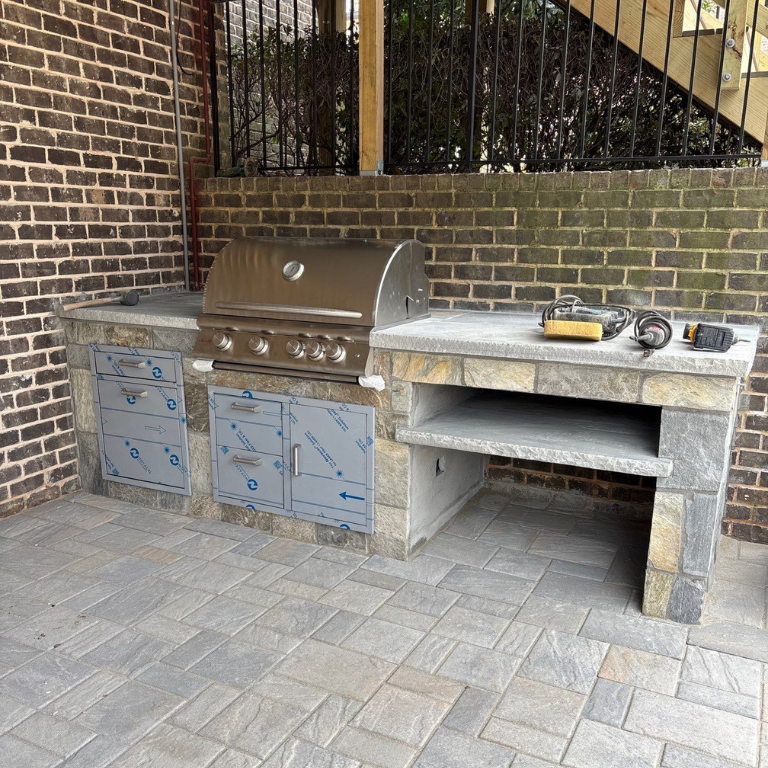
Seal and Maintain Your Stone to Prevent Weather Damage
Whether you’re in Sandy Springs, Grant Park, or anywhere across the metro — this is the one maintenance task you cannot skip. Annual sealing protects your stone from moisture, grease, tree sap, and everything else Atlanta throws at outdoor surfaces.
Recommended Sealing Schedule
Minimum standard: Seal once a year. Ideal: twice a year (spring + fall). A quick rinse with a garden hose and a damp cloth after cooking are the easiest habits you can build.
What Is the Best Stone for an Outdoor Kitchen in Atlanta?
Granite, limestone, and stacked fieldstone are the three stones we recommend most for Atlanta outdoor kitchens. Each one handles our humidity, temperature swings, and direct sun differently. The right choice depends on your priorities.
We walk every client through stone samples during the planning phase so you can see and touch the options before you commit.
Frequently Asked Questions
Questions Homeowners Ask
How long does it take to install a stone outdoor kitchen in Atlanta?
Most builds take two to four weeks from the first day on site. Layout size, stone selection, and weather all affect the timeline. Larger U-shape kitchens with custom countertops trend closer to four weeks. A straightforward linear build can wrap in two.
What stone works best for outdoor kitchens in Atlanta’s climate?
Granite and fieldstone are our top picks. Both handle heat, rain, and humidity without cracking or staining. We’ve installed both across the metro area and they hold up year after year with basic maintenance.
Do I need a permit for an outdoor kitchen in Atlanta?
Yes, most Atlanta projects that include gas lines or electrical hookups require a local building permit. The process is straightforward — we help our clients understand what’s needed before any work starts so there are no surprises.
What size outdoor kitchen fits a typical Atlanta backyard?
A six-to-ten-foot layout fits most intown Atlanta lots comfortably. We measure your yard during the site visit and recommend the size that gives you full function without crowding the rest of your outdoor space.
When is the best season to build an outdoor kitchen in Atlanta?
Fall and early spring are the sweet spot. Both give you dry weather and open contractor schedules. Summer builds are possible, but afternoon storms can push timelines. Winter works too in most years — Atlanta rarely gets cold enough to stop masonry work for long.
How do I keep my stone outdoor kitchen clean in Atlanta’s pollen season?
Rinse your surfaces once a week in spring to keep pollen from settling into the stone. Reseal your stone at least once a year — ideally right after pollen season ends — to block stains from pollen, grease, and rain.