
Stone Fireplaces in Atlanta:
Custom Masonry Built to Last
There is a moment that happens on almost every project we finish. The homeowner walks out, sees the completed fireplace for the first time, and just stops. They do not say anything right away. They just look at it. That reaction tells us everything we need to know about why we do this work.
In Atlanta, a stone fireplace changes how you use your outdoor space and how you feel about your home. A cool October evening in Buckhead hits differently when you have a real fire going and somewhere intentional to sit around it. A mild January night in Decatur does not have to mean going inside at 7pm anymore.
This page covers:
- Custom stone fireplace builds for Atlanta homes
- Outdoor fireplaces and fire pit alternatives
- What to expect from a licensed Atlanta masonry contractor
- How to get started with a consultation and fast project start
Our promise: Durable craftsmanship built to last — from the first site visit to the final stone placement.
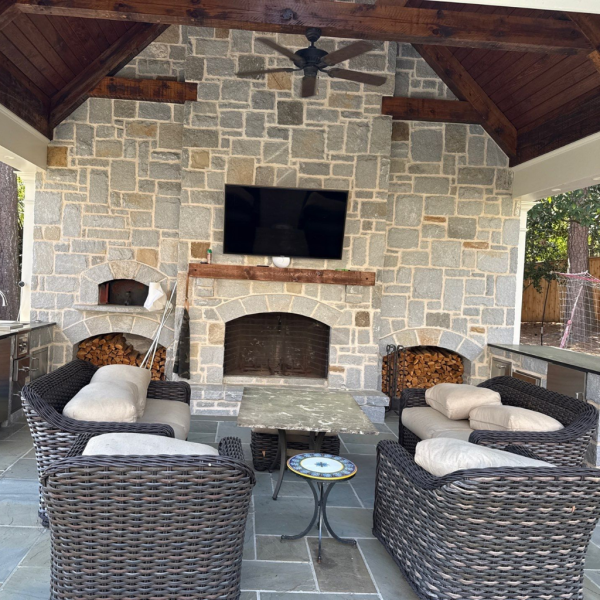
What Is a Stone Fireplace in Atlanta and How Does It Work?
A stone fireplace is a permanent masonry structure built from natural or manufactured stone. It includes three core components:
What makes a stone fireplace different from a prefab or metal insert is the permanence. This is not something you assemble from a box or swap out in a few years. When we build a stone fireplace, we are building something that will outlast the deck, the landscaping, and probably the roof.
Stone fireplaces are a fixture in Atlanta neighborhoods like Buckhead, Decatur, and East Cobb — and they are built by licensed masonry contractors to meet local fire codes. If someone offers to build you one without pulling permits, walk away.
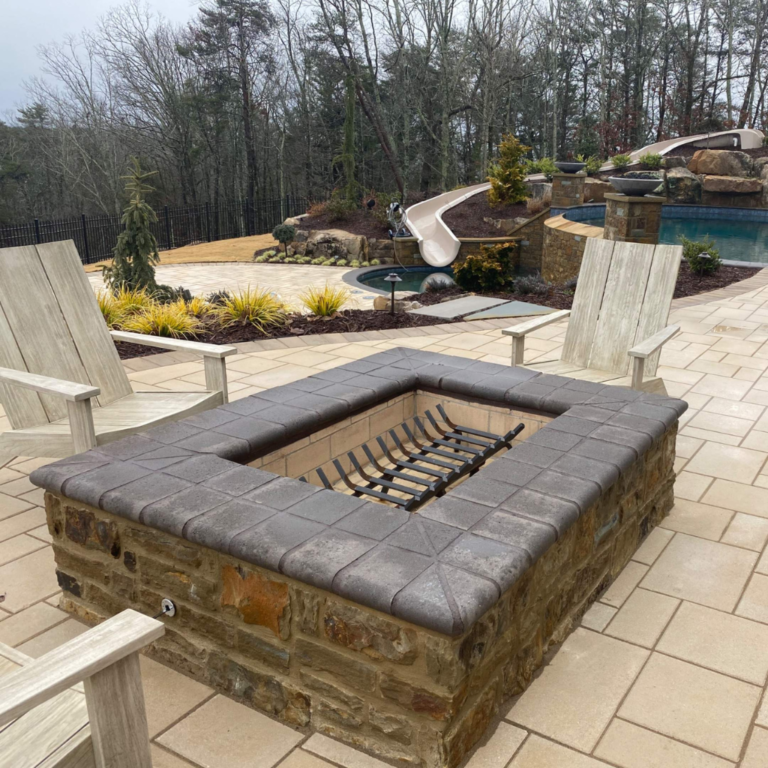
How Stone Fireplaces Differ From Fire Pits in Atlanta Backyards
We get asked this question constantly, and our honest answer is: it depends on how you actually use your backyard — not how you think you will use it.
Most people who come to us thinking they want a fire pit end up building a fireplace once they understand the difference. Not because a fireplace is always better, but because when they think through how they actually entertain and how often they plan to use the space, the fireplace fits their life better.
📍 Atlanta advantage: Mild winters mean an outdoor stone fireplace is usable for eight months or more each year. We have clients who use theirs almost every weekend from September through April. That kind of consistent use makes a fire pit feel like the wrong tool for the job pretty quickly.
Our honest advice:
- If you entertain regularly and want a space that feels finished and intentional — build the fireplace
- If you camp twice a year and want something low-commitment — a fire pit is fine
- If you are on the fence, think about where you spent time outside last fall and what was missing
The fire pit vs. fireplace question is really a question about how serious you are about your outdoor space. We are not going to push you either way — but we will tell you what we see homeowners actually using five years after installation.
Why Outdoor Stone Fireplaces Add Real Value to Atlanta Homes
We are going to be direct with you here: not every backyard upgrade pays off at resale. Pools are polarizing. Elaborate landscaping rarely returns dollar for dollar. But permanent masonry is different, and we have seen it firsthand on projects across the Atlanta metro.
Why Atlanta buyers respond to stone fireplaces:
- Permanent masonry features rank among the top returns in outdoor living improvements
- A finished fireplace signals the home has been maintained and upgraded with care
- It extends the functional square footage of the property
- Buyers in intown neighborhoods like Virginia-Highland actively look for outdoor living features
Why stone holds its value over time:
- Does not fade, warp, or require regular replacement
- Ages better than wood decks or composite materials
- Appeals to buyers and appraisers alike
Here is something we notice on almost every project in Virginia-Highland and similar intown neighborhoods: when a buyer walks a backyard with a finished stone fireplace, they stop calculating. They start imagining. That shift — from analytical to emotional — is what drives offers. A fire pit does not do that. A well-built stone fireplace does.
The honest truth: If you are building primarily for resale, a stone fireplace is one of the safest bets in outdoor living. If you are building because you love your home and want to enjoy it more — it pays off the first night you use it.
What to Expect During a Custom Stone Fireplace Build
One of the biggest things we hear from homeowners who have worked with other contractors is that they felt left in the dark. Nobody told them what was happening or why it was taking as long as it was. We run our projects differently.
Here is how the process works from first contact to finished fireplace:
📍 A note on Atlanta’s soil: This is something a lot of contractors skip over and then wonder why their work shifts or cracks two winters later. Atlanta’s clay-heavy soil expands and contracts with moisture. If your footing is not built to account for that movement, the fireplace pays for it eventually. We do not cut corners on base prep — it is where the whole project either holds or fails.
Timeline: Most custom stone fireplace projects in Atlanta run one to three weeks depending on design complexity and permit approval. Weather can affect the schedule — we keep you updated throughout.
What we handle for you:
- Permit applications
- Footing and foundation prep
- Full masonry installation
- Coordination with inspectors
How to Choose the Right Stone for Atlanta’s Climate and Soil
This is where a lot of homeowners make expensive mistakes. They choose a stone based on photos they saw online — usually from a project in Arizona or the Pacific Northwest — and then wonder why it looks different or starts to deteriorate after a few Atlanta summers.
Atlanta’s climate is its own thing. The humidity is real. The winters are mild but not frost-free. And the soil moves. Material choices that work beautifully in drier climates can absorb moisture, stain, and crack here.
Atlanta’s two biggest material challenges:
- High humidity through summer months
- Freeze-thaw cycles in winter that crack poorly chosen stone
Stone performance comparison for Atlanta conditions:
Natural stone vs. manufactured stone — quick comparison:
Our personal preference for Atlanta outdoor fireplaces is granite or bluestone for anything fully exposed to the elements. They are not always the cheapest option, but we have never had a callback on a granite fireplace because of weather damage. We have had callbacks on softer materials that were chosen to save a few hundred dollars upfront. That is not a trade we recommend.
📍 Our approach: We recommend stone based on your specific site, design, and Atlanta’s climate — not just what looks good in the showroom.
What Atlanta Homeowners Should Know Before Installation Begins
We are going to give you the advice we give every homeowner who calls us before they have talked to anyone else. Know what you are getting into before you sign anything with any contractor — including us.
Permits are required. Atlanta and Fulton County require permits for permanent outdoor masonry structures, including stone fireplaces. Starting without one creates problems at resale and during inspections. If a contractor tells you permits are not necessary for your project, that is a red flag.
We handle permits as part of every build. You do not need to deal with the city’s building department on your own. But you should know this is happening and what it covers.
Site requirements to know before your consultation:
Come to your consultation ready with:
- A rough idea of where you want the fireplace located
- Photos of your backyard and any existing hardscape
- HOA guidelines if your neighborhood has them
- Any concerns about neighboring properties and smoke or sight lines
A word on neighbors: This comes up more than people expect. The honest answer is that a well-built fireplace with proper chimney height and spark arrestors rarely bothers anyone. The fireplaces that create neighbor problems are the ones that were sited poorly or built without thinking about where the smoke goes. We have seen contractors place a fireplace directly upwind of a neighbor’s back porch. That is not a building code problem — it is just a bad decision. We think through these things before we set the first stone.
Reducing neighbor impact:
- Spark arrestors limit ember drift
- Proper chimney height directs smoke upward and away
- Correct siting keeps smoke from blowing toward adjacent yards
The homeowners who have the smoothest projects are the ones who come in with realistic expectations, a clear sense of where they want the fireplace, and an understanding that good work takes the right amount of time. We will always give you a straight timeline and a straight answer.
Frequently Asked Questions
Questions Homeowners Ask
Is a stone fireplace better than a fire pit for my Atlanta backyard?
A stone fireplace is the better long-term choice if you want safety, structure, and lasting property value — and in our experience, most Atlanta homeowners who build fire pits wish they had built a fireplace once they see how differently the two perform over time. Fire pits cost less upfront and work well for occasional use, but they offer no smoke control and no permanent value to your home. For homeowners who use their outdoor space regularly, the fireplace wins every time.
Do I need a permit to build a stone fireplace in Atlanta?
Yes — most Atlanta jurisdictions require a permit for permanent outdoor masonry structures, including stone fireplaces. The permit process covers footing specs, clearance requirements, and fire code compliance. We pull permits as part of every build we take on, and we would encourage you to walk away from any contractor who tells you otherwise.
What type of stone holds up best in Atlanta’s weather?
Granite and bluestone handle Atlanta’s humidity and temperature swings better than most alternatives. Both are dense, moisture-resistant, and suited for the freeze-thaw activity Atlanta sees in winter. We have built with both extensively across the metro and have not had weather-related failures on either. We recommend materials based on your specific design, budget, and how the fireplace will be used.
Will an outdoor stone fireplace bother my neighbors?
A properly built fireplace almost never does. Proper placement, chimney height, and spark arrestors go a long way toward minimizing smoke and noise impact. Most neighbor issues come from fireplaces sited too close to property lines or built without adequate smoke control — both of which are avoidable with good planning. We account for those factors during the design phase, before anything gets built.
How long does it take to build a custom stone fireplace in Atlanta?
Most projects run one to three weeks depending on design complexity and permit approval. Weather can also affect the timeline. We give you a realistic schedule during the consultation and keep you updated as the build progresses — no surprises, no excuses.
Can a stone fireplace be built close to my Atlanta home’s exterior wall?
Clearance requirements vary based on your fireplace design and local code, and there is no single answer that applies to every situation. What we can tell you is that we have worked with a wide range of site constraints across Atlanta and have almost always found a solution that works. A site visit is the only way to give you a straight answer for your specific yard.