
Masonry Contractor Near the Hapeville Depot in Hapeville, GA
We work around the Hapeville Depot in Hapeville, a railroad depot built in 1890. A Masonry Contractor Hapeville Depot Hapeville search usually means older brick.
This page covers historic brick repair, storefront masonry, chimneys, and steps.
Why a local crew matters downtown:
Older downtown buildings and homes sit close to the airport.
Hapeville is its own city, so the city issues the permits.
Parking is tight, so deliveries need a plan.
Downtown buildings of this age were built to breathe. Water that got in was meant to get back out through the joints. Modern sealers and hard mortar close that path, which is why the wrong repair often makes things worse.
Call for availability in Hapeville.Older brick buildings stay sound when water stays out at the top. Open joints, cracked cornices, and failed flashing let it in. Repointing with a matched mix handles most of it. The roof edge gets checked on the same visit.
Check our Atlanta masonry contractor services, then ask about availability in Hapeville.
Older Downtown Brick Shows Wear at the Joints and Cornices
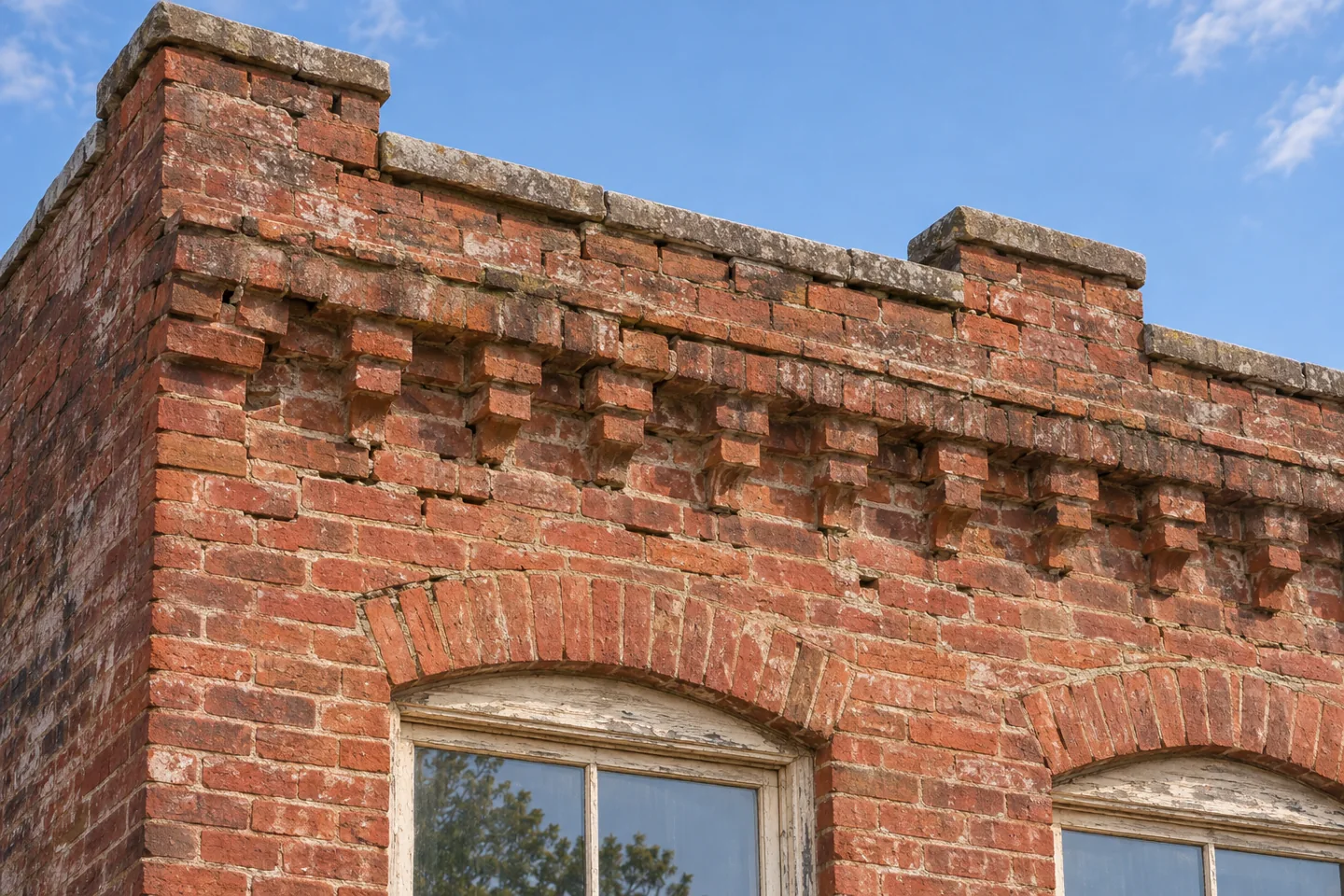
Owners of older shops and homes here see the same early signs. We find open joints and cracked cornices.
The depot is one of the oldest in Georgia, built in 1890. Downtown brick from that era needs a soft mix, not a modern bagged one.
The first look starts at the roof edge and works down. We check the cornice, the flashing line, and every lintel above an opening. Then we sound the wall for hollow spots behind the face. What turns up at the top usually explains the damage you noticed at eye level.
Historic-District Rules Shape Repair Choices
The Hapeville Historic District is on the National Register. Ask the city before any exterior change on a building inside it.
We plan the design first, then the paperwork, then the dig. Hapeville planning and zoning is the office to start with.
We put the design on paper before anyone files anything. That way the city sees a clear scope and you are not guessing at what will be approved. Where a change is visible from the street, we photograph the existing condition first. Those photos carry a lot of weight in a review.
Airport-Area Traffic and Parking Shape Crew Timing
Official permitting and local information
Owners near the airport know how the roads fill. We time deliveries away from the worst of it.
The depot sits a short walk from the airport. Curbside staging stays brief, and the entry to your building stays usable.
We set the schedule around your hours and the corridor traffic, in that order. Early starts are normal here, so the noisy part is done before your first customer. The sidewalk stays open with a protected path while we work. The frontage gets swept before you open for the day.
Repointing, Chimney, and Step Work Follows a Clear Order
Here is the order we follow: prep, repair, cure, cleanup. Overhead work gets a protected walking path underneath it.
A former car plant shaped this town for decades. Much of the downtown brick dates from those years and shares the same wear.
Overhead work needs the access settled before anything else begins. We confirm the lift footprint, the ground protection, and the drop zone on the first visit. Repointing runs top down so finished work does not get dirtied twice. Cut-out depth follows the joint width, not the clock.
Check our masonry repair and repointing services for joint, cornice, and chimney work.
Yearly Checks Protect Old Railroad-Era Brick
One look a year at the roof line is enough for most buildings. Water entering at the top ruins joints all the way down the wall.
The depot stands on North Central Avenue. Buildings on that stretch share the same age and the same weak points.
One walk a year at the roof line is the whole list. Look for a lifted cap, an open joint, or staining that runs down from a single point. Any of those means water is entering above. Handling it there costs a fraction of repointing the wall below.
How Our Crew Reaches Hapeville From I-75 and Central Avenue
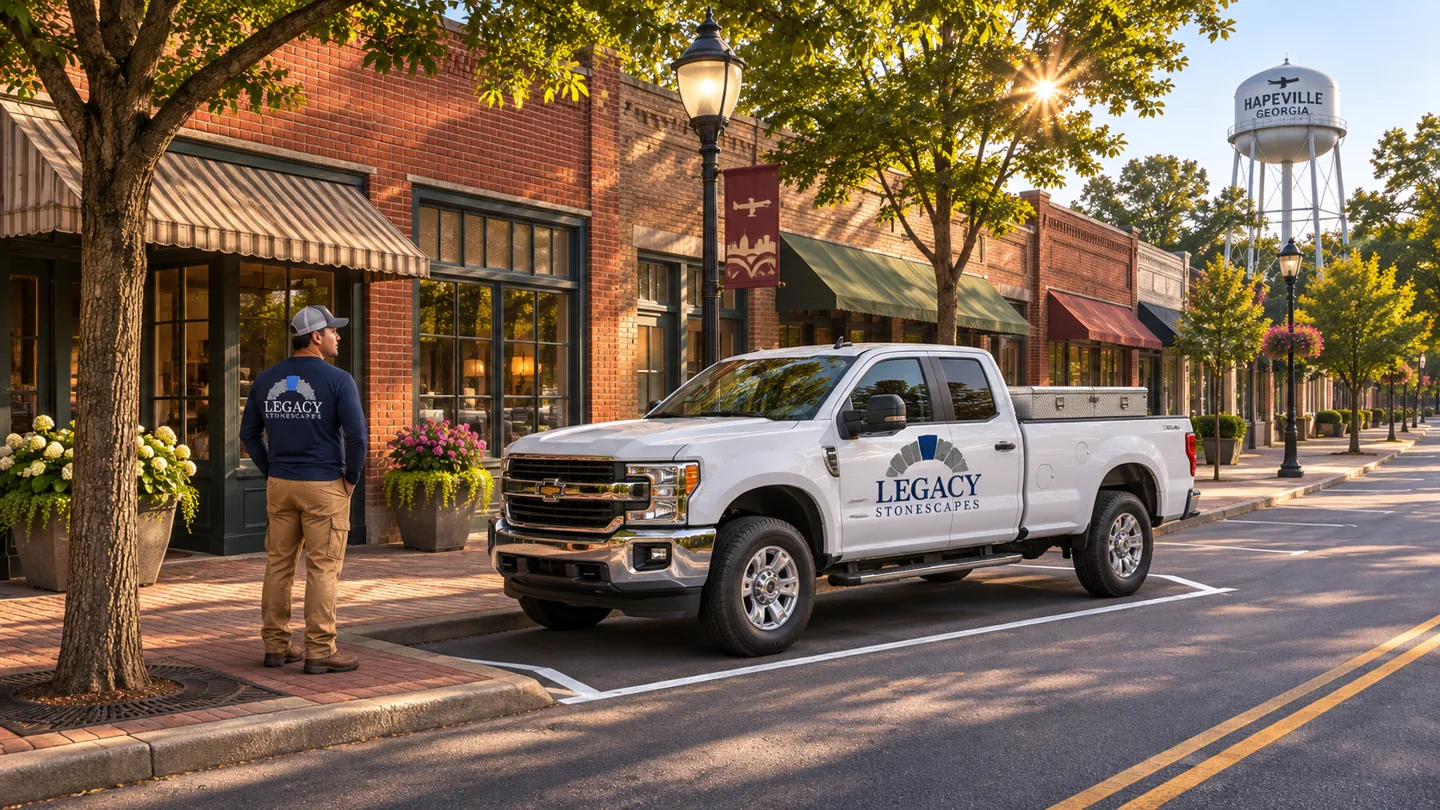
We come to you; there is no yard for customers to visit.
Hapeville sits about seven miles south of downtown Atlanta.
Crews route in from I-75, then onto Central Avenue.
You get a route note and an arrival window before the first visit.
The first visit is a measure and a photo set, worked around your hours. We send the scope in writing with a start window and a day count. Where a lift is needed we say so up front, because it changes both the price and the lead time.
Questions We Hear in Hapeville
Do historic rules apply in Hapeville?
It depends on the property. The Hapeville Historic District is on the National Register, so we point you to the city before design. We will tell you which office to call rather than guessing the answer for you.
Can you repair old storefront brick?
Yes, after a check of the joints, cornice, and roof edge. The scope follows how deep the wear goes. On buildings this old we use a soft mix, because a hard one breaks the brick face instead.
Can you work near airport traffic?
Yes. We time deliveries and pours away from the busiest hours on the corridor. Early starts are normal here, so the frontage is clear before your customers arrive.
Do you repair brick steps and walls?
Yes. The footing gets checked before any new brick goes on. Steps get a new base, since the old one is usually what cracked in the first place.
Do you handle chimneys?
Yes. Crowns, caps, and joints are common on buildings and homes of this age. A crown gets rebuilt with a slope and an overhang so water drips clear of the brick.
How soon can you come?
Site visits usually open within the week. Build dates depend on the current schedule. Lift rental has to be booked, so overhead work needs a little more lead time.
Check our bricklayer services in Atlanta, then check availability in Hapeville. We can walk the building this week.
Check availabilityLegacy Stonescapes · 991 Moreland Dr SE, Atlanta, GA 30315