
Erosion Control in Atlanta That Keeps Red Clay Where It Belongs
In Atlanta, heavy storms wash red clay off slopes and into yards. This page covers erosion control for sloped yards, gullies, washouts, and exposed footings.
We walk the site, map where water flows, and plan the fix. As masonry contractors, we hold soil with stone walls and terraces.
The best method for erosion control in Atlanta matches the fix to slope and water flow. Red clay sheds rain fast, so most yards need drainage plus structure.
- Gentle slopes: groundcover, pine straw, or erosion control blankets
- Steep slopes: stone terraces or retaining walls that break the grade
- Runoff paths: French drains, dry creek beds, or rock-lined swales
Check our Atlanta masonry contractor services to see the full range of stone work behind this.
Book an Erosion Site WalkErosion Leaves Clear Warning Signs Before Soil Washes Away
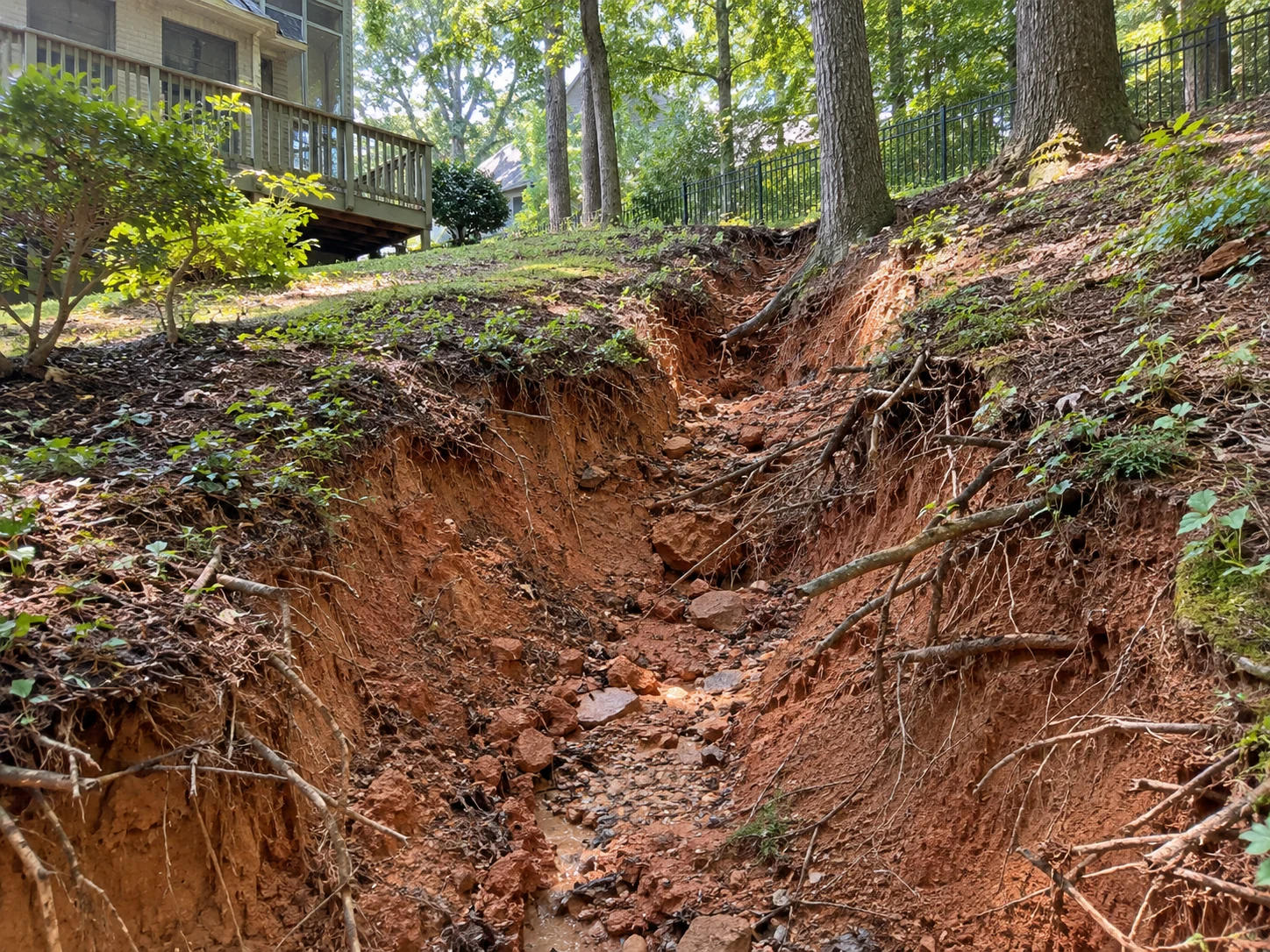
Atlanta sits on hilly ground, and yards in places like Buckhead lose soil every storm season. Red clay sheds rain fast, so water cuts channels instead of soaking in.
Signs we look for:
- Gullies cut across the slope
- Holes at the base of downspouts
- Tree roots left exposed
- Mud washed onto patios and walks
- Walls starting to lean
Catching this early protects footings, walkways, and walls. Erosion control is the work of slowing that water down and holding the soil in place.
Check our masonry repair services when a small wall has already started to move.
The Right Erosion Fix Depends on Slope and Water Flow
We match the fix to the problem, so a small bare patch does not get a full wall. Summer thunderstorms drop heavy rain fast on hard, compacted clay, and that decides a lot.
- Gentle grades: groundcover and pine straw hold the surface
- Steep slopes: terraces break one long grade into short ones
- Runoff paths: drains and rock-lined swales carry water to an outlet
A right-sized fix is the affordable one. Spending on structure you do not need is the expensive mistake.
A Water Plan Comes Before Any Stone Goes In
Steep and creek-side lots, like parts of Morningside, need a plan before a shovel moves. Expect a site walk, a water-flow map, a grade check, and a written plan.
Georgia 811 marks buried lines before any digging starts. Atlanta rules on land disturbance , creek buffers, and tall walls may also apply, so we check first.
That is how you stop erosion on a sloped yard: find the water, then build for it.
Stone Walls and Terraces Hold Atlanta Hillsides in Place
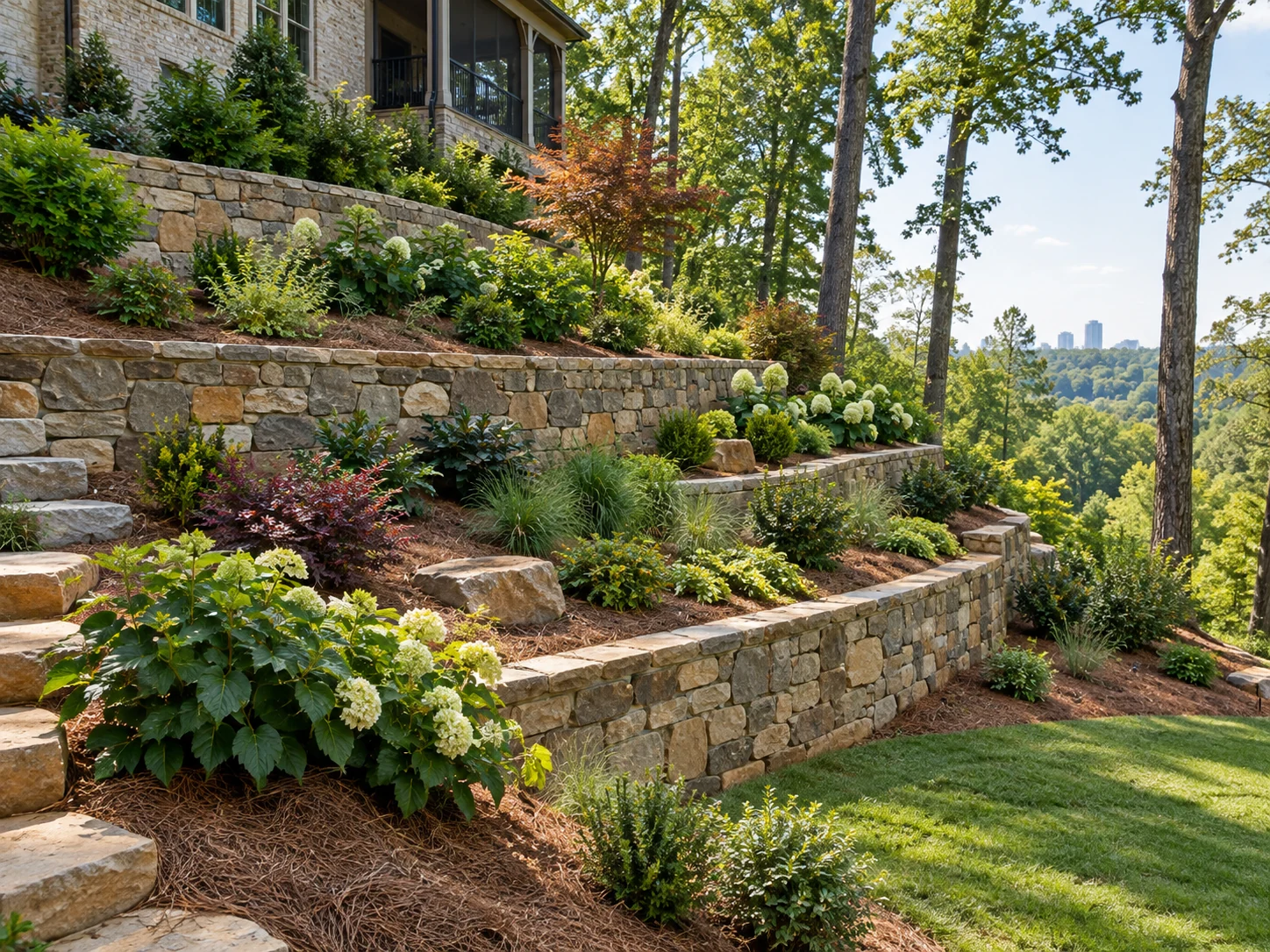
Washed-out slopes, open erosion holes, and rotting timber walls all land in the same bucket. We build stone retaining walls, terraces, dry creek beds, and rock-lined swales.
Terraces turn one steep slope into flat, stable steps you can plant and walk. Wet clay pushes hard on any wall. Footings, gravel backfill, and weep holes carry that load instead of fighting it.
Filling an erosion hole works the same way. We find the water source, compact fill in layers, then send the runoff somewhere safe.
Check our stone retaining wall services to see how the base and the drain line go in.
Book an Erosion Site WalkFinished Erosion Work Should Pass the First Heavy Storm
After a new wall, terrace, or drain, we walk the site once real rain has fallen. Grant Park and Buckhead owners get the same check.
What we look for:
- Water leaving at the spots we planned
- No fresh channels cut in the slope
- Weep holes flowing, not blocked
- Fill still tight around the base
Atlanta gets a little over 50 inches of rain a year, so weak spots show up fast. Soil erosion can be stopped and the grade rebuilt, but only once the water has somewhere to go.
Check our retaining wall contractor services if an older wall is the weak point.
Plants, Mulch, and Stone Work Together to Stop Future Erosion
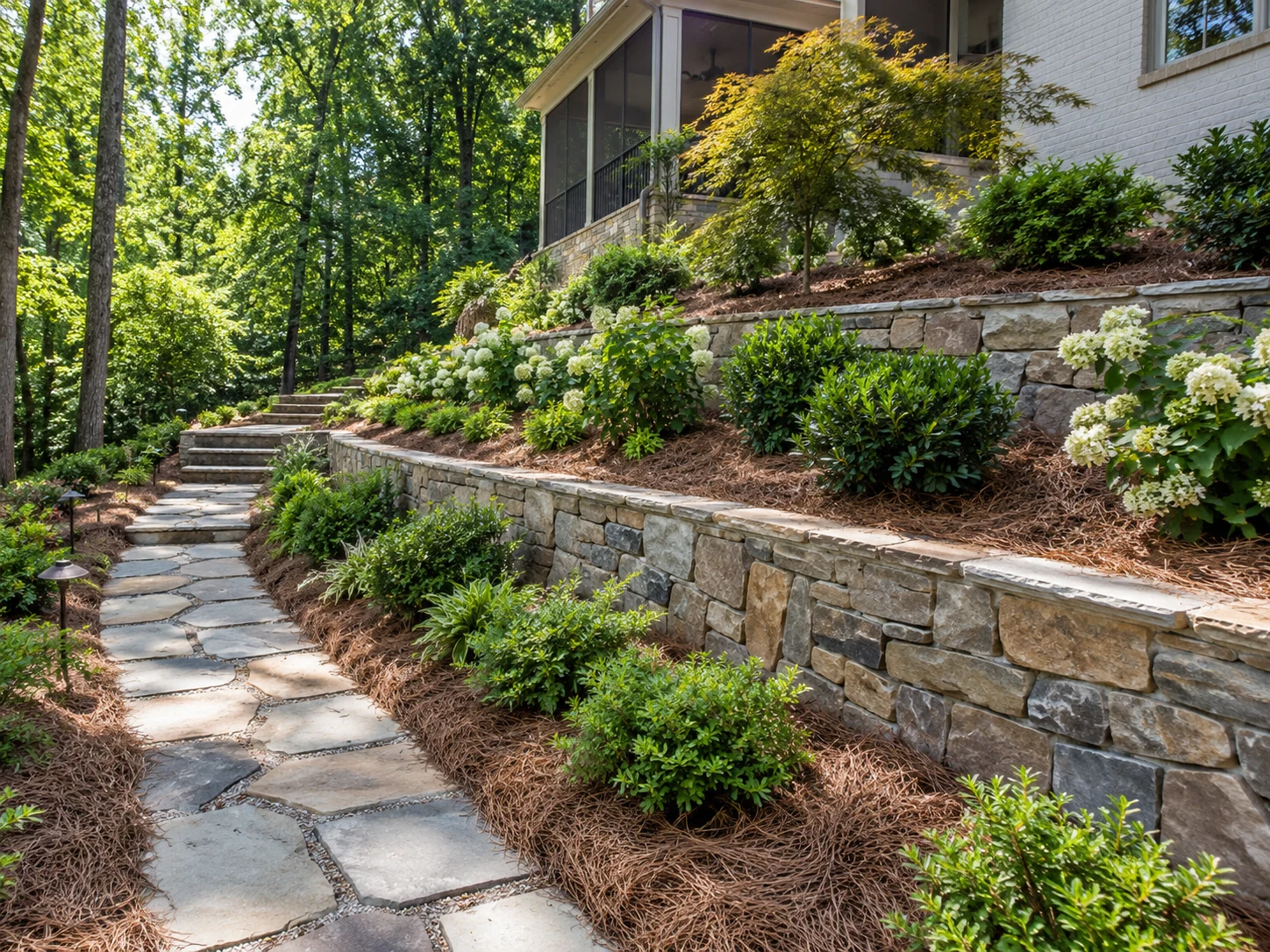
Once the wall or terrace is in, planting locks the soil down. Groundcovers and native grasses root in terrace beds and hold topsoil.
Mulch helps on gentle beds. Heavy rain floats bark off a steep slope, so it is the wrong tool there.
Pine straw is the Georgia staple for a reason. It knits together on a slope and stays put better than bark. Stone paths keep foot traffic off planted slopes while the roots take hold.
Check our stone patio and walkway services for paths that keep feet off a new slope.
Book an erosion site walk in Atlanta. We will look at the slope, the runoff, and what it will take to hold the grade.
Book an Erosion Site WalkLegacy Stonescapes · 991 Moreland Dr SE, Atlanta, GA 30315 · [PHONE — CONFIRM BEFORE PUBLISH]
Erosion Control Questions We Hear in Atlanta
Can you fix the erosion holes in my yard?
Yes. We find the water source first, then fill and compact the hole. The last step is redirecting the runoff so it does not reopen.
What is the simplest erosion fix for a small problem area?
Often it is regrading, pine straw, and a rock-lined swale. We do not build walls you do not need.
Can you repair a slope that has already washed out?
Yes. We rebuild the grade with fill and stone, then stop further soil loss. Older walls the washout undermined get checked at the same time.
Do I need a permit for erosion control work in Atlanta?
It depends on the disturbed area, the wall height, and creek buffers. We check city rules before design.
Will mulch alone hold my hillside?
Only on gentle grades. Steep clay slopes need stone or terraces to break the grade.
Can I plant on my slope after you build terraces?
Yes. Terrace beds give groundcovers and native grasses flat soil to root in.