
Concrete Patios, Driveways & Walkways in Atlanta — Built to Handle Georgia Heat and Red Clay
Concrete flatwork in Atlanta faces humid summers, heavy afternoon storms, and red clay soil that never stops moving. Whether you need a new patio, driveway, or walkway, the surface has to hold up year after year.
This page walks you through what goes into a concrete pour for Atlanta homes. You will learn how we prepare the ground, choose the right mix, and finish the slab so it lasts decades — not just a few seasons.
Our masonry contractor team handles every step, from the first site visit to the final seal coat. Every surface we pour meets City of Atlanta and county building codes for residential flatwork.
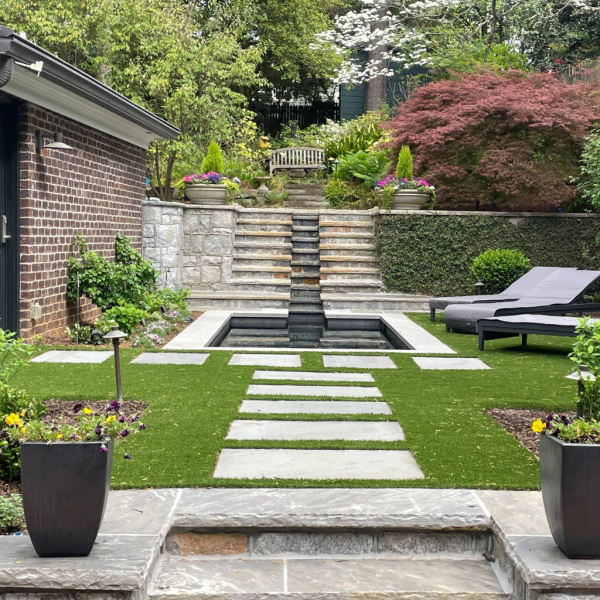
Concrete Outlasts Most Patio Materials in Atlanta’s Climate
If you live in Buckhead or East Atlanta and you are weighing patio options, concrete gives you the longest return on your money. A properly poured and sealed concrete patio lasts 25 to 30 years with very little upkeep.
Wood decks warp and rot in Atlanta’s humidity. Pavers can shift when clay soil swells. Concrete stays flat and solid when the base work is done right.
Atlanta’s winters are mild enough that freeze-thaw cracking is rare here. That means your slab keeps its shape longer than the same pour would up north. Pair that with a good sealer, and you get a surface that handles Georgia heat and summer rain without breaking down.
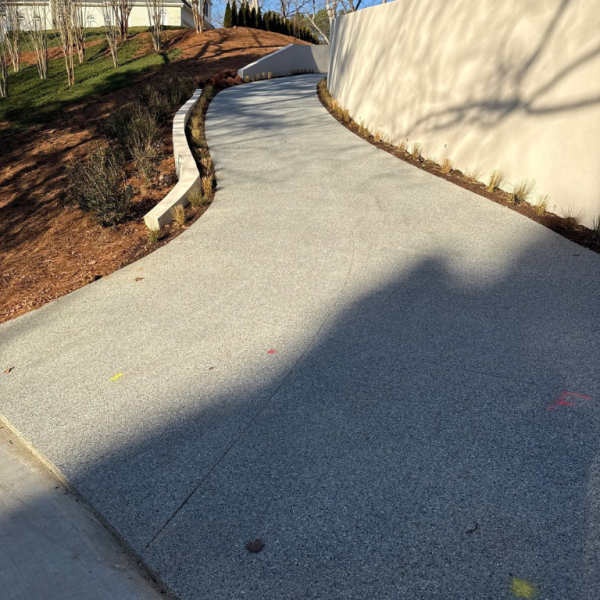
Common Concrete Driveway Problems Start Below the Surface
Cracks, sinking, and flaking on Atlanta driveways almost always trace back to what is underneath the slab. If you see these signs, the concrete itself may not be the real issue.
Georgia red clay expands when it soaks up rain and shrinks as it dries out. That push and pull shifts any slab that sits on a weak or poorly compacted base. Over time, sections settle unevenly and cracks spread.
Knowing the root cause matters. A surface crack from normal shrinkage is a simple fix. A slab that has dropped two inches because of clay movement may need a full tear-out and re-pour with proper base prep.
Common Driveway Problems in Atlanta
- Hairline cracks from curing shrinkage — usually cosmetic
- Wide cracks or heaving — often caused by clay expansion below the slab
- Scaling or flaking surface — poor mix or missing sealer after pour
- Uneven settling — base was not compacted deep enough for local soil
Atlanta’s Red Clay Soil Demands Proper Base Preparation
If you are planning a new pour in Midtown or Grant Park, the soil under your slab matters more than the concrete on top. Atlanta sits on heavy clay that holds water and swells.
We excavate past the topsoil and clay layer, then lay a compacted gravel base. This gives the slab a stable, draining surface to sit on. Without it, standing water collects under the concrete and the clay pushes upward as it swells.
Fulton County and DeKalb County building codes may set minimum sub-base depths for residential flatwork. We check the requirements for your lot before we dig. That way, your pour passes inspection and performs the way it should.
Fall and Early Spring Are the Best Seasons to Pour in Georgia
Concrete cures best when the air temperature stays between 50°F and 80°F. In Atlanta, that window lines up with mid-October through November and again from late February through April.
July and August heat dries the surface too fast. When the top sets before the inside, you get shrinkage cracks that start within days. Our crew can use curing blankets and timed watering, but cooler months are still the safest bet for a clean finish.
Atlanta’s winter lows rarely drop below freezing long enough to damage fresh concrete. But very cold nights slow down the cure, so we plan around the forecast to keep your project on schedule.
Best Pour Windows for Atlanta
- Fall: Mid-October through November — cooling temps, lower rain odds
- Early Spring: Late February through April — warm days, mild nights
- Avoid: June through August — surface dries too fast in 90°F+ heat
A New Concrete Driveway Adds Curb Appeal and Home Value
If you are getting ready to list a home in Decatur or Kirkwood, your driveway is one of the first things buyers see. A cracked, stained slab sends the wrong message before anyone walks through the front door.
A fresh concrete driveway signals that the home has been well cared for. In Atlanta’s competitive housing market, that first impression can set the tone for the rest of the showing.
Appraisers note driveway condition during evaluations. A new, code-compliant pour with clean edges and proper drainage adds real value — not just curb appeal. It also removes a negotiation point that buyers might use to push your price down.
Sealing and Joint Spacing Prevent Cracks Before They Start
Every concrete slab will try to crack as it cures and expands with heat. The goal is to control where those cracks happen. That is what control joints do — they give the slab a planned place to move.
We cut joints at the right spacing for your slab size and thickness. Without them, cracks form randomly and spread across the surface.
Sealing is the other half of long-term care. Atlanta’s summer storms dump heavy rain that pushes into unsealed pores. Pine sap and pollen from nearby trees stain bare concrete fast. A quality sealer blocks moisture and makes cleanup simple.
We recommend resealing every two to three years. That small step adds years to your slab and keeps the surface looking clean.
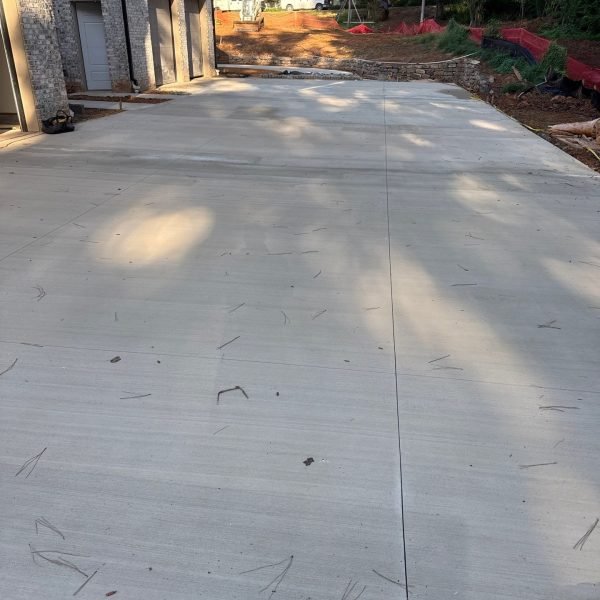
How Long Does a Concrete Patio Last in Atlanta?
A concrete patio in Atlanta typically lasts 25 to 30 years when it is installed and sealed properly. Georgia’s mild freeze-thaw cycles put less stress on slabs than northern climates, which means less cracking over time.
Lifespan depends on three main factors:
- Correct sub-base compaction over Atlanta’s clay soil
- Adequate control-joint spacing for thermal expansion
- Routine resealing every two to three years
Hiring a licensed masonry contractor makes sure the mix design, drainage slope, and base prep match local soil and weather conditions.
Frequently Asked Questions
Questions Homeowners Ask
How soon can I schedule a concrete patio pour in Atlanta?
Most projects can be scheduled within two to four weeks, depending on the season. Spring and fall are our busiest months because the weather is best for pouring. If you reach out during summer or winter, lead times are often shorter. We set a timeline during your consultation and confirm the pour date once permits are in hand.
Do I need a permit for a new concrete driveway in Atlanta?
Yes, most new concrete driveways in Atlanta require a permit. The City of Atlanta and unincorporated Fulton County have different application steps, so the process depends on your address. We handle permit research for your lot and let you know what is needed before work begins.
What concrete thickness works best for Atlanta driveways?
A four-inch slab is standard for most residential driveways in Atlanta. If you park heavier vehicles like trucks or RVs, we may recommend a five- or six-inch pour with reinforced mesh. We size the thickness based on the load your driveway will carry and the soil conditions on your lot.
Can you pour concrete walkways on sloped Atlanta yards?
Yes, we pour walkways on sloped lots throughout Atlanta, including hilly neighborhoods like Candler Park and Inman Park. We grade the path and add drainage features so water runs off the surface instead of pooling. Steps or terraced sections may be needed on steeper grades.
How do I protect my concrete patio from Atlanta’s summer storms?
A penetrating sealer is the best protection against heavy rain, pollen, and pine sap. We apply the first coat after the slab cures and recommend resealing every two to three years. Proper drainage slope and control joints also reduce the chance of water damage or cracking during storm season.
What happens if it rains right after a concrete pour in Georgia?
Light rain after the slab has started to set is usually not a problem. If heavy storms are in the forecast, we cover the fresh pour with plastic sheeting to keep excess water off the surface. We plan around Georgia’s afternoon storm patterns and schedule pours for the safest weather windows.