
Custom Backyard Waterfall Installation in Atlanta, GA
In Atlanta, backyard waterfalls turn sloped red-clay lots into year-round outdoor features. We design and install custom stone waterfalls on natural grades, and tie them into patios or retaining walls already on your property. Schedule an on-site consultation so we can assess your slope, drainage, and stone options. Every waterfall we build is hand-stacked by licensed masons — not assembled from a pond kit.
Can you build a waterfall in your backyard in Atlanta?
Yes, most Atlanta backyards have enough slope and space for a custom stone waterfall. A masonry contractor evaluates your lot’s grade, soil drainage, and proximity to structures before designing the feature.
- Yards with natural slope need less excavation and cost less to build on
- Red-clay soil requires proper drainage layers to prevent washout
- Permits may apply in certain Fulton or DeKalb County zones
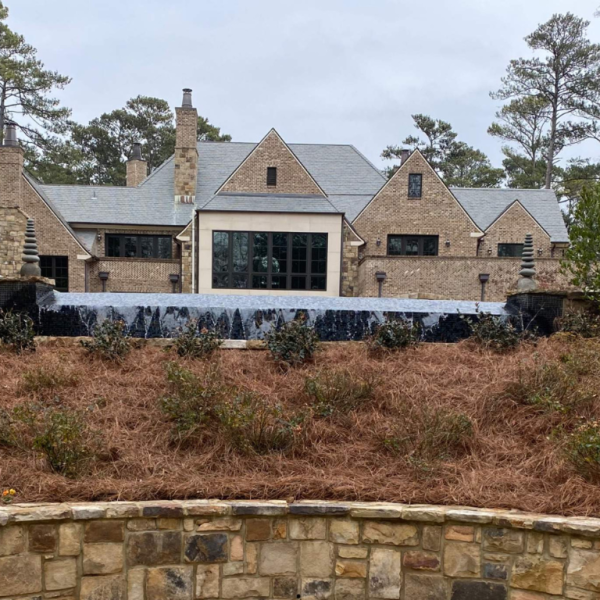
Most Atlanta Backyards Can Support a Custom Stone Waterfall
Masonry cleaning is not the same as pressure washing. It removes embedded contaminants from porous brick, stone, and block — without forcing water into the surface under high pressure.
What we evaluate during your site visit:
- Grade and slope — steeper lots give water more natural drop with less excavation
- Open space — room for the waterfall footprint plus access for stone delivery
- Equipment access — how materials and machinery reach your build area
- Proximity to structures — distance from your home, fence lines, and existing hardscape
Even smaller yards can support a waterfall. We scale the design to fit your lot and match the stone to your existing hardscape.
A Professionally Built Waterfall Raises Your Home’s Outdoor Value
A stone waterfall creates a focal point that ties your outdoor living space together. In Atlanta’s competitive housing market, buyers in Buckhead and Sandy Springs notice distinctive hardscape features.
What a custom waterfall adds to your property:
- A permanent stone feature that holds value better than wood or prefab fixtures
- More usable outdoor space around the water feature for seating and entertaining
- A visual and audible centerpiece that sets your home apart from neighboring listings
| Upgrade Type | Material | Long-Term Value |
|---|---|---|
| Custom stone waterfall | Natural fieldstone / ledge stone | High — permanent, weather-resistant |
| Prefab pond kit | Molded plastic / resin | Low — fades, cracks, looks generic |
| Wood water feature | Treated lumber | Moderate — requires regular sealing and replacement |
Site Grading and Drainage Come Before the First Stone Is Set
Before we stack a single stone, we grade your site and engineer the drainage. Skipping this step is how waterfalls fail.
Why grading and drainage matter in Atlanta:
- Heavy seasonal rain saturates ungraded soil and shifts basin structures
- Red-clay soil doesn’t drain on its own — water sits and erodes the base
- Red-clay soil doesn’t drain on its own — water sits and erodes the base
Our site prep process:
- Survey the grade and map water flow paths.
- Excavate and level the basin footprint.
- Install engineered drainage layers beneath the basin.
- Route runoff away from your foundation and neighboring structures.
- Compact and stabilize the base before stone placement begins.
Proper grading protects the stone structure long-term. When the base is right, stones stay locked and water flows exactly where we designed it to go.
Natural Stone Stacking Creates a Waterfall That Looks Like It Belongs
The difference between a waterfall that looks built and one that looks like it grew there comes down to stone selection and stacking technique. We hand-stack every piece — no mortar grids, no uniform edges.
Stone types we use for Atlanta waterfalls:
| Stone | Source | Best For |
|---|---|---|
| Georgia fieldstone | Local quarries | Natural, earthy look that blends with Piedmont landscapes. |
| Tennessee ledge stone | Regional supply | Layered, textured faces with consistent stacking depth. |
| Moss rock | Southeast sources | Organic feel with natural lichen and color variation. |
Why hand-stacking matters:
- Each stone is set to control how water sheets, splits, and drops
- No two tiers look the same — the result mimics natural rock formations
- Stone placement accounts for water volume at every level
Georgia fieldstone and Tennessee ledge stone blend with the native Piedmont landscape common in Midtown and Inman Park yards. That’s mason work, not pond-kit assembly.
Water Flow Testing and Basin Sealing Confirm a Leak-Free System
We don’t hand you a finished waterfall without testing it first. Every build goes through a multi-point flow test before your final walkthrough.
Why hand-stacking matters:
| Test Point | What We Check | Why It Matters |
|---|---|---|
| Pump output | Flow rate specs | Prevents weak or uneven water movement. |
| Tier distribution | Even water sheeting | Avoids dry spots or overflow. |
| Basin seal integrity | Under-liner moisture | Stops hidden leaks before they cause damage. |
| Debris resistance | Algae/Pollen rating | Atlanta humidity and pollen demand higher-rated materials. |
If a flow line is uneven or a seal point shows stress, we catch it during testing. You see the waterfall running at full volume before we call the job complete.
Seasonal Upkeep Keeps Your Atlanta Waterfall Running Clean Year-Round
A stone waterfall doesn’t need much from you. Here’s what each season looks like:
| Season | Tasks | Time Needed |
|---|---|---|
| Spring | Extra filter cleaning (pollen season, late March–May), basin rinse | 30–45 min |
| Summer | Pump check, top off water level during dry stretches | 15–20 min |
| Fall | Leaf and debris removal, check basin drain | 20–30 min |
| Winter | Visual inspection — most Atlanta waterfalls run year-round | 10–15 min |
Your quarterly maintenance checklist:
- Check pump operation and flow rate
- Rinse basin walls and floor
- Remove leaves, twigs, and settled debris
- Swap or clean pump filter
- Inspect stone for shifting or settling
Atlanta’s mild winters rarely call for full winterization. Most of our clients run their waterfalls twelve months a year.
Frequently Asked Questions
Questions Homeowners Ask
How long does a backyard waterfall installation take in Atlanta?
Most residential builds complete in 5–10 days. Timeline depends on how much site prep your lot needs and how complex the stone layout is.
Do I need a permit to build a backyard waterfall in Atlanta?
Some Fulton and DeKalb County zones require grading or plumbing permits. We handle the filing so you don’t have to track down the right office or paperwork.
What stone types work best for Atlanta backyard waterfalls?
Georgia fieldstone, Tennessee ledge stone, and moss rock all hold up well in local humidity and freeze-thaw cycles. We help you choose based on your yard’s look and your budget.
Can a waterfall be added to an existing patio or retaining wall?
Yes — we can integrate a waterfall into most existing stone or block structures. We assess the current build to make sure it can support the added weight and water flow.
Does a backyard waterfall need a lot of maintenance?
No. Quarterly pump checks, seasonal basin cleaning, and filter swaps after heavy pollen months are all it takes.
Will a waterfall attract mosquitoes to my Atlanta backyard?
Moving water discourages mosquitoes. A properly circulated waterfall does not create the standing water that mosquitoes need to breed.
Schedule Your On-Site Waterfall Consultation
Call us at (404) 989-2700 or request a visit online.
We’ll walk your property, evaluate your slope and drainage, and show you stone options that fit your yard.