Backyard Pond Installation in Atlanta, Georgia
In Atlanta, backyard ponds turn red-clay yards into calm outdoor retreats. We design and build custom ponds for Atlanta homes, handling every step from excavation to stone edging and water features.
What to expect:
- On-site evaluation of your yard’s slope, soil, and sun exposure
- Custom design plan based on your space and goals
- Scheduled build, typically completed within weeks
- Masonry contractor expertise — durable stonework and proper drainage from day one
Atlanta’s Red Clay Affects How Your Pond Gets Built
If you live in Buckhead, Grant Park, or East Atlanta, your yard likely sits on dense Piedmont clay. That red clay holds water, but it also expands and contracts with seasonal rain and summer heat. A pond built without accounting for that movement will shift, crack, or fail to drain.
Why red clay matters for pond construction:
Clay expands when wet and shrinks when dry — causing liner stress and edge shifting
Grading adjustments are needed that most national pond guides skip entirely
Compacted bases and proper cuts prevent long-term drainage failure
We grade and excavate based on what your specific soil is doing. Getting this step right means your pond holds its shape through every wet spring and dry August.

The Right Pond Depth Keeps Fish and Plants Healthy Year-Round
Pond depth controls how well your fish and plants handle Georgia’s hot summers and brief winter freezes. Atlanta sits in USDA Zone 7b/8a, where winters rarely freeze deep enough to threaten a well-built pond.
| Pond Use | Recommended Depth | Why |
|---|---|---|
| Koi or goldfish | 24–36 inches | Keeps water cool in summer, insulated in winter. |
| Aquatic plants only | 18–24 inches | Shallow shelves support marginal plants. |
| Large koi collections | 36+ inches | Extra depth for temperature stability. |
We design depth zones within each pond. Shallow shelves hold marginal plants. Deeper centers give fish a cool retreat during July and a buffer during January cold snaps. Unlike northern climates that need four feet or more, Atlanta’s mild winters let us build effective ponds at shallower, more practical depths.
Permit Rules in Fulton County Shape Your Pond Project Timeline
Before any digging starts, you need to know what your local jurisdiction requires. In metro Atlanta, permit rules change fast from one area to the next.
| Jurisdiction | What to Expect |
|---|---|
| City of Atlanta | Grading and stormwater permits may apply based on pond size and lot grade. |
| Fulton County | Separate grading rules for unincorporated areas. |
| DeKalb County | Own stormwater management standards; different from Fulton. |
| HOA-governed neighborhoods | May restrict water features, grading, or fence requirements. |
📍 Key takeaway: If you live in Decatur, Sandy Springs, or unincorporated Fulton County, your permit process may differ from neighbors just a few miles away. We check requirements during your site visit so there are no surprises mid-project.
Stone Edging and Liner Work Create a Pond That Lasts
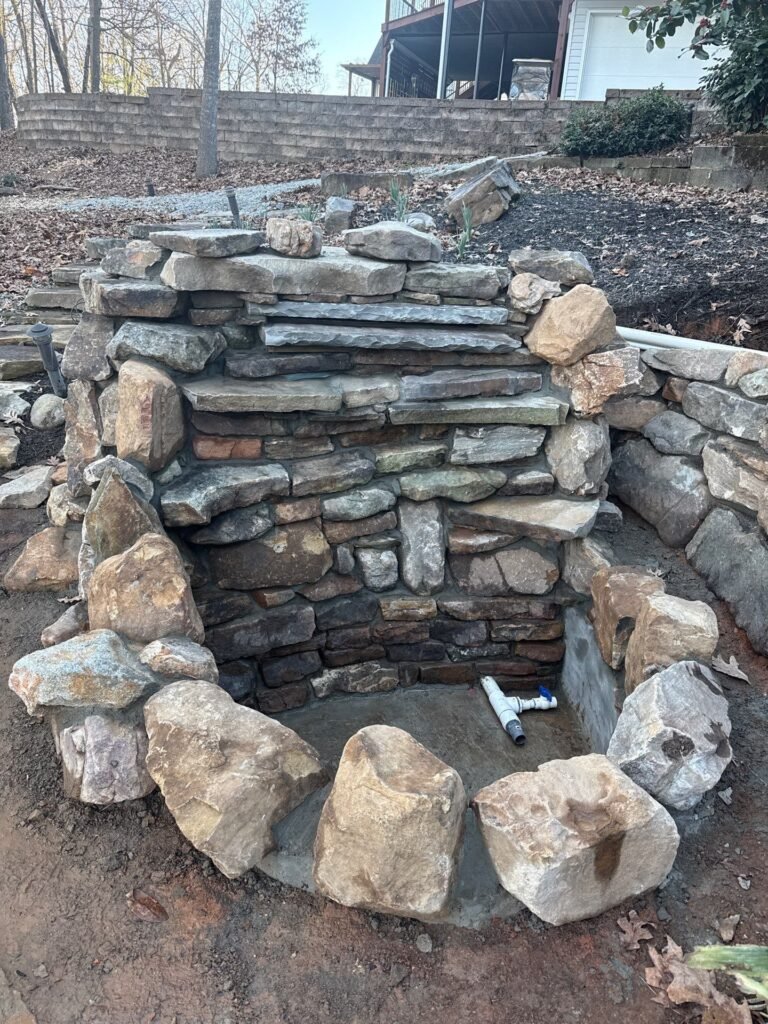
The liner keeps water in. The stone edging keeps the liner hidden and the rim stable. Both need to be installed correctly, or you end up with exposed rubber and eroded edges after the first heavy rain.
What we use
Georgia fieldstone and native flagstone. These materials match the garden styles you see in Midtown and Inman Park while handling Atlanta’s heavy spring rainfall without shifting.
How our stone edging is different:
- Every stone is set by hand and locked into a masonry border
- Not a loose rock ring sitting on top of soil
- Built to handle water movement, foot traffic, and seasonal ground shifts
- Fieldstone or flagstone hides the liner and prevents rim erosion
A Finished Pond Should Hold Water and Drain Properly Before You Add Fish
A pond is not ready for fish the day construction ends. We run a 48-hour fill test on every build to catch problems before anything living goes in.
| What the Fill Test Checks | Why It Matters |
|---|---|
| Leak detection | Confirms the liner holds water under full volume. |
| Pump flow | Verifies circulation reaches all zones of the pond. |
| Overflow drainage | Ensures excess water routes away from your foundation. |
📍 Atlanta’s seasonal downpours (especially March through May) mean overflow routing is not optional. Water must drain away from your home’s foundation, not toward it. We set overflow paths during the build, then verify them during the fill test.
Winterizing Your Atlanta Pond Prevents Freeze Damage Every January
Atlanta sees one to three weeks of below-freezing nights most winters. That is enough to crack an exposed pump and stress fish in a shallow pond. If you live in Virginia-Highland, Druid Hills, or Reynoldstown, you have likely seen a hard freeze catch outdoor features off guard.
Simple winter prep steps:
- Pull pumps that are not rated for freezing temperatures
- Add a floating de-icer to fish ponds
- Trim back dead plant material before the first frost
- Check liner edges for soil erosion from fall rain
Winterizing takes less than a day. It protects your liner, your equipment, and your fish through Atlanta’s short but real cold season. We walk every client through these steps after the build is complete.