
Concrete Slabs in Atlanta — Built for Georgia Clay and Southern Heat
We’ve poured concrete slabs across Atlanta since 2012. In that time, one thing has stayed the same — the red clay underneath never stops moving. It swells after a week of rain. It shrinks and cracks open during a dry August. Every slab we pour has to answer to that soil.
This page walks you through what goes into a concrete slab installation in Atlanta. We cover how we prep the ground, what happens on pour day, and what you should do after the concrete cures. Whether you need a patio behind your bungalow in Grant Park or a new garage pad in Sandy Springs, the process starts the same way: with the dirt.
Our masonry crew sizes, forms, and finishes every slab on site. We don’t hand off your project to a subcontractor halfway through. The same team that preps your soil is the team that trowels the finish.
What Is a Concrete Slab and How Is It Installed in Atlanta?
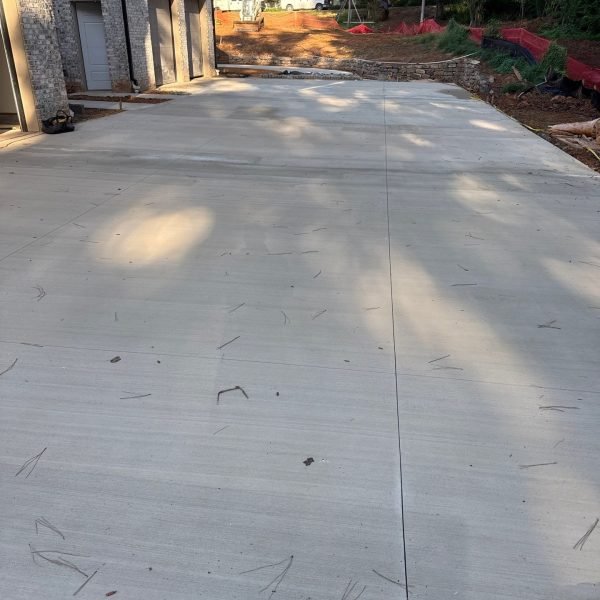
A concrete slab is a flat, thick panel of concrete used as a floor or foundation. In Atlanta, slabs sit on compacted gravel fill placed over excavated clay soil. Wire mesh or rebar inside the pour adds strength. Most residential slabs run 4 to 6 inches thick.
- Common uses: driveways, patios, garage floors, shed pads
- Typical cure time: 7 days before light use, 28 days for full strength
- Local factor: Atlanta freeze-thaw cycles require proper joint spacing
What a Concrete Slab Actually Is and Why Atlanta Homes Need Them
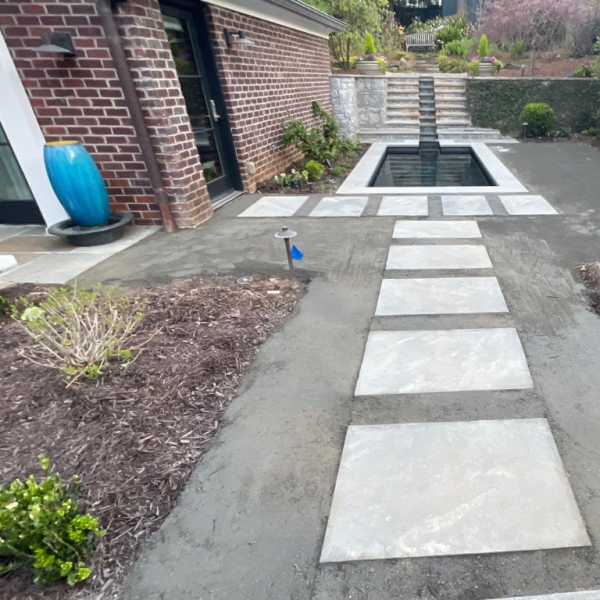
A concrete slab is one solid, level surface that sits directly on the ground. It holds heavy loads — cars, grills, hot tubs, workshop equipment — without flexing or shifting. It also blocks ground moisture from creeping up into the space above it.
We get calls from homeowners in Midtown and Grant Park who want to add usable space to homes built on shallow foundations. A slab gives them a stable, level surface for a patio, workshop, or sunroom addition without raising the structure off the ground.
Here’s the part most people don’t think about: a slab ties directly to the soil beneath it. In Atlanta, that soil is red clay. So the quality of your slab depends almost entirely on how well the ground was prepared before the truck showed up. We’ve torn out slabs that were less than two years old because the original crew skipped that step.
⚠ Contractor’s honest take: A slab poured on unprepared Atlanta clay can crack within a year. We’ve seen it happen on jobs where the homeowner hired the cheapest bid. Soil prep is not a line item you want to save money on.
Concrete Slabs Outlast Most Alternatives in Georgia’s Climate
We talk to Atlanta homeowners every week who are comparing options for a new driveway, patio, or garage pad. Most are deciding between concrete, pavers, asphalt, and gravel. Here’s what we tell them, based on what we’ve seen hold up and what hasn’t.
Georgia’s summer heat softens asphalt — we’ve seen tire marks pressed into driveways by mid-July. Heavy spring rain washes gravel into the street. Pavers can look great, but on clay soil they shift and settle unevenly over time.
A properly poured concrete slab handles the heat and the rain without needing yearly repairs. In our experience, it’s the best long-term value for flat outdoor surfaces in this climate.
🗣 From our crew: We replaced an asphalt driveway in East Atlanta that was only eight years old. The homeowner said it got sticky every summer and cracked every winter. The concrete slab we poured in its place has been flat and solid for six years now.
How Atlanta’s Red Clay Soil Affects Your Slab Prep
If you’ve lived in Atlanta for any amount of time, you know the clay. It stains everything it touches. But the real problem with red clay is what it does underground. It swells when it absorbs rain and shrinks when it dries. That push-and-pull cycle never stops, and it puts constant stress on anything sitting on top of it.
Drive through East Atlanta or Decatur and look at the older driveways and walkways. The ones that have buckled or split apart? That’s clay doing its thing underneath. The concrete was probably fine. The ground beneath it wasn’t prepped.
This is the step that separates a 30-year slab from a 3-year slab. We don’t rush it, and we don’t skip it — even when the site looks “good enough” on the surface.
What proper slab prep looks like on an Atlanta job site:
- Excavate the clay layer down to stable ground — usually 6 to 10 inches deep
- Fill with 4 to 6 inches of compacted gravel to create a base that doesn’t move
- Grade the surface so water drains away from the slab, not toward your foundation
- Set forms to the correct thickness and slope before any concrete arrives
⚠ Red flag to watch for: If a contractor’s bid doesn’t mention excavation or gravel fill, ask why. In our opinion, any concrete bid in Atlanta that skips soil prep is a bid that’s setting you up for a callback. We’ve been hired to tear out and redo work from crews that cut this corner.
What Happens During a Professional Concrete Slab Pour
If this is your first slab pour, you probably want to know what the day actually looks like. Here’s the process we follow on every Atlanta job, broken down step by step.
Lots in Buckhead and Sandy Springs often have slopes that throw off the whole layout. We adjust form height and gravel depth so the finished slab comes out level, even when the yard drops two or three feet across the pour area.
🗣 What we’ve learned: Pour day moves fast. Once the truck arrives, you have a limited window before the concrete starts to set. That’s why we do all the excavation, forming, and reinforcement work the day before. By the time the truck backs in, we’re ready to go.
Signs Your Existing Concrete Slab Needs Repair or Replacement
We walk onto older Atlanta properties all the time and see slabs that are sending clear warning signs. The homeowner usually knows something is off, but isn’t sure whether it’s a quick fix or a full replacement. Here’s what to look for.
Homes in Kirkwood and Ormewood Park built in the 1950s through 1970s are the ones we see the most. Many of those slabs are only 3 inches thick with no reinforcement. They were standard for the time, but they don’t hold up under a modern patio setup or a car’s weight.
⚠ Our advice: Small hairline cracks are normal and nothing to worry about. But if you can fit a quarter into the crack, or if one side of the slab is higher than the other, don’t wait. The longer you leave it, the more expensive the fix becomes.
How to Prevent Cracking and Settling on Atlanta Slabs
You can’t stop Atlanta clay from moving. But you can give your slab the tools to handle that movement without falling apart. These are the steps we recommend to every client — whether we just poured their slab or they’re maintaining one that’s been down for years.
- Cut control joints at the right intervals — these give the concrete a place to crack in a straight line instead of randomly across the surface
- Grade the soil around the slab so water runs away from it, not underneath it
- Seal the surface every 3 to 5 years — this blocks moisture from soaking into the pores of the concrete
- Install a French drain if water collects near the slab after storms
Seasonal storms in north Georgia dump a lot of water in a short time. That water soaks into the ground fast, finds its way under slabs, and pushes them up from below. We’ve seen slabs lift two inches after a single bad storm in areas with poor drainage.
French drains and slope grading are the two best defenses. If you only do one thing after your pour, get the grading right. Water is the enemy of every slab in this city.
💡 Seasonal tip from our team: Seal your slab before the first hard freeze each year. Late October or early November is the right window in Atlanta. Sealing closes the pores in the surface and cuts down on the flaking and spalling you see after a cold snap.
Frequently Asked Questions
Questions Homeowners Ask
Can I pour a concrete slab on red clay soil in Atlanta?
Yes, but the clay must be excavated and replaced with compacted gravel fill first. Red clay expands and contracts with every rain cycle. If you pour directly on top of it, the slab will crack — usually within the first year. We’ve seen it happen on brand-new homes where the builder skipped this step to save a few hundred dollars.
How long does a concrete slab last in Georgia weather?
A well-poured slab lasts 30 to 50 years with sealing and proper drainage. Georgia’s heat and rain are tough on outdoor surfaces. But cured concrete with a sealed finish holds up far better than asphalt, gravel, or unsealed pavers over that span.
Do I need a permit for a concrete slab in Atlanta?
Most slabs over a certain size need a building permit from the City of Atlanta, DeKalb County, or Fulton County — depending on your address. We pull the permit before work starts so the project stays to code and you don’t get hit with fines down the road.
What can I use instead of a concrete slab for my Atlanta patio?
Pavers and gravel work for light-use patios where you’re only placing chairs and a small table. But if you need a surface that handles a grill, a fire pit, heavy planters, or foot traffic for years, a concrete slab is the stronger pick. Pavers shift on Atlanta’s clay, and gravel washes into the yard after every big storm.
What are the most common concrete slab problems in Atlanta?
Cracking from clay movement, water pooling from poor drainage, and surface flaking from skipped sealing. We see all three regularly on jobs across the city. Every one of them is preventable with the right soil prep, grading, and a basic maintenance routine.
Should I hire a masonry contractor or pour my own slab in Atlanta?
DIY pours fail more often than they succeed on Georgia clay. The soil prep alone requires equipment most homeowners don’t have — a skid steer, a plate compactor, and enough gravel to fill the excavation. Then there’s the forming, reinforcement, and finishing, all of which affect how long the slab lasts. A licensed masonry contractor handles all of that and pulls the permit for you.
🗣 Straight talk: We get a few calls every spring from homeowners who poured their own slab the year before and now have cracks running through it. The concrete itself was fine. The ground underneath it wasn’t right. That’s the part that requires a crew, the right tools, and experience with Atlanta soil.