
Whole House Brick Veneer in Atlanta: Lasting Curb Appeal Built for Georgia Weather
We have been wrapping Atlanta homes in brick veneer since 2012. In that time, we have seen vinyl siding peel off in summer heat, wood rot through after two wet springs, and fiber cement fade before the warranty runs out. Brick does not do any of that. It just sits there and looks good for decades.
If you want the look of a full-brick home without tearing down to the studs and building solid masonry walls, whole house brick veneer is the project. Here is what we do:
- New veneer on bare sheathing for new construction or homes stripped to the frame
- Re-veneer over existing siding when the structure is sound but the exterior is not
- Partial-to-full upgrades for homes with a brick front and vinyl on the other three sides
- Full project management from pulling the permit to cleaning up the last mortar smear
Free On-Site Estimates: We come to you, measure, look at your foundation and sheathing, and give you a real number. No ballpark quotes over the phone. Call (404) 989-2700 to schedule.
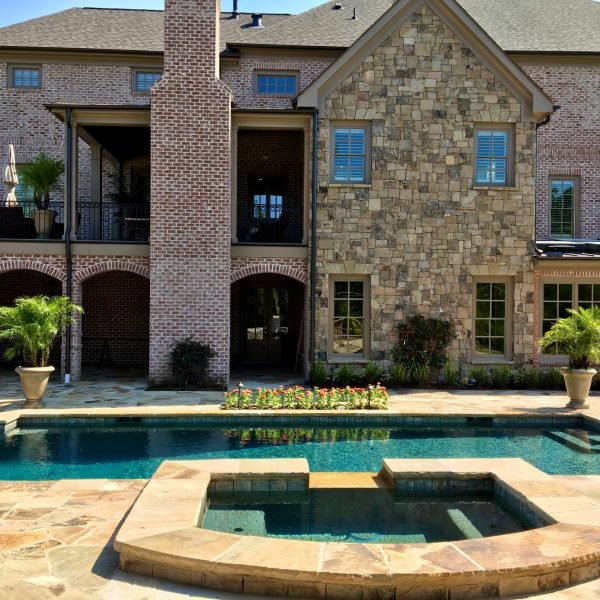
Brick Veneer Gives Atlanta Homes the Look of Solid Brick at a Lower Cost
We get this question a lot from homeowners in Buckhead, Druid Hills, and Sandy Springs: what is the difference between solid brick and brick veneer? From the street, nothing. Your neighbors will not be able to tell. The difference is behind the wall.
Solid brick is structural. It holds the house up. That means thick walls, a wide footer, and a lot more brick. Veneer is a single layer of real brick attached to a framed wall with metal ties. Same brick. Same mortar. Same look. About half the material and a fraction of the foundation load.
Our Take on Red Clay and Foundations: Most of the homes we work on in Atlanta sit on Georgia red clay. That soil swells when it rains and shrinks when it dries. We have seen foundations shift enough to crack solid brick walls. Veneer is lighter, so it puts less stress on a foundation already dealing with clay movement. If your home sits on red clay and you are choosing between solid brick and veneer, veneer is the smarter call nine times out of ten.
Whole House Veneer Holds Up Against Atlanta Heat, Rain, and Freeze-Thaw Cycles
Atlanta is not gentle on exteriors. We have replaced vinyl siding that warped after three Georgia summers. We have torn off wood clapboard so rotted you could push a finger through it. And we have seen fiber cement boards with termite trails running behind them. None of that happens with brick.
Warning signs to watch for:
- Summer highs in the 90s with humidity that makes the air feel like a wet towel
- Over 50 inches of rain spread across spring and fall storms
- A mild but real freeze-thaw cycle from December through February
Why the Air Gap Matters More Than the Brick Itself: Here is something most homeowners do not realize. The brick is not what keeps your house dry. The one-inch air gap between the brick and the sheathing does. Water gets behind brick. It always does. The air gap gives that water a path to drain down and exit through weep holes at the base. Without that gap, moisture sits against your sheathing and rots it from the outside in. We have opened up walls on homes where the original crew skipped the air gap or clogged the weep holes with mortar droppings. Every one of those walls had damage. That drainage system is what separates veneer that lasts 50 years from veneer that fails in 15.
Simple Upkeep Protects Your Brick Veneer for Decades
Brick veneer is one of the lowest-maintenance exteriors you can put on a house. But low-maintenance does not mean no-maintenance. We have seen homeowners ignore their brick for 20 years and then wonder why they need a $15,000 repair. A little attention each year keeps that from happening.
Freeze-Thaw Is Real Here, Just Milder: Atlanta is not Chicago. Our freeze-thaw cycle runs from about December through February and it is mild by comparison. But mild does not mean harmless. Water gets into a small mortar crack in November. It freezes in January. It expands. The crack gets bigger. Next year the same thing happens. After five or six winters of neglect, you have joints that are open enough to let serious water behind the wall. Fixing small cracks each spring stops that cycle before it starts.
One more thing: do not use a high-pressure washer on brick veneer. We get calls every year from homeowners who blasted their walls with 3,000 PSI and knocked mortar out of the joints. A garden hose with a spray nozzle or a washer set below 500 PSI is all you need.
Frequently Asked Questions
Questions Homeowners Ask
Can you install brick veneer over existing siding on my Atlanta home?
Yes, in most cases we can. We inspect the sheathing condition first. If it is solid, we add a moisture barrier and install metal ties directly over the existing siding before laying the veneer. If the sheathing underneath has soft spots or water damage, we strip it and start clean. We would rather find that problem before the brick goes up than have you deal with it five years down the road.
Does brick veneer need a permit in Atlanta or Fulton County?
Full exterior cladding usually requires a building permit. We handle the permit filing and schedule every required inspection. Permit timelines in Atlanta vary, but we build that lead time into the project schedule so it does not delay your start date.
How long does a whole house brick veneer project take in Atlanta?
Most whole-house installs run two to four weeks. The variables are home size, how many windows and doors need detail work, and weather. Summer projects sometimes take a few extra days because our crews adjust schedules to protect mortar quality during peak heat. We give you a timeline up front and keep you updated if anything changes.
Will brick veneer help lower my homeowners insurance in Georgia?
Many Georgia insurers offer lower premiums for brick exteriors because brick resists fire and storm damage better than vinyl or wood. We cannot quote your exact savings because it depends on your carrier and policy. But we have had homeowners tell us the premium drop paid for a meaningful chunk of the project over time. Call your insurer with the project details before you start.
Is brick veneer a good choice for older homes in Inman Park or Grant Park?
It is one of the best choices for those neighborhoods. Older homes in Inman Park and Grant Park were built on foundations that were never designed for full solid-brick weight. Veneer gives you a durable brick exterior without overloading those original footings. We have done several veneer wraps on early 1900s homes in those areas and the lighter load is a real advantage on aging structures.
What maintenance does brick veneer need in Atlanta’s climate?
An annual low-pressure rinse, a spring mortar joint inspection, and repointing when you spot cracks. That is the short list. Most Atlanta homes need full repointing every 20 to 25 years. The biggest thing people skip is the post-pollen rinse. Clearing that buildup in April or May keeps moisture from sitting against the brick through the summer.