
Boulder Retaining Walls in Atlanta — Built to Hold Georgia’s Red Clay
Sloped yards and red clay soil are part of life in Atlanta. Boulder retaining walls give you a direct way to stop erosion, level your yard, and support the landscape around your home.
Most projects move from a site visit to the build within two weeks. Our masonry crew matches the right stone type and size to your specific lot so the wall fits the ground it sits on.
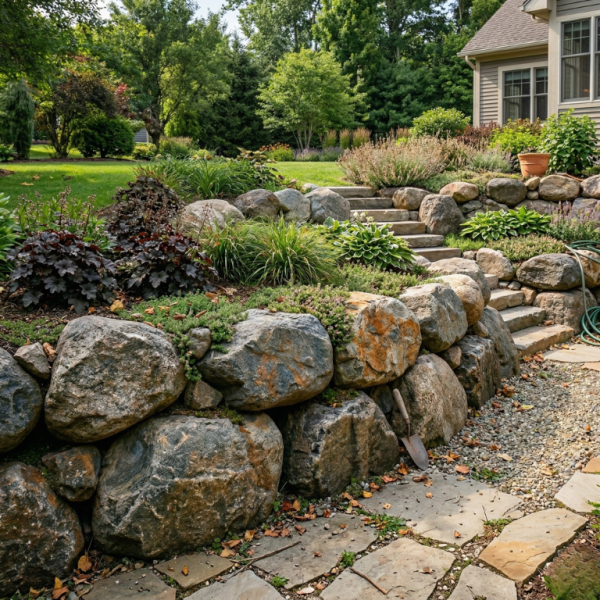
Atlanta’s Clay Soil Makes Drainage Behind Your Boulder Wall Critical
If you live in Buckhead or East Atlanta, you may already see water pooling on your slope after a storm. That standing water is a problem. Red clay holds moisture instead of letting it pass through.
Without a drainage system behind your wall, trapped water builds pressure against the stone. Heavy spring rains in Atlanta make this worse fast.
⚠️ What Happens Without Drainage
Water saturates the clay and pushes against boulders from behind. That force shifts stones out of position over time. Most retaining wall failures in Atlanta trace back to missing or failed drainage.
Our Drainage System Behind Every Boulder Wall
This system is what keeps your wall standing straight through Atlanta’s wet seasons.
Boulders Hold Sloped Yards Better Than Stacked Block in Many Atlanta Lots
Choosing between boulders and stacked block comes down to your lot. Many yards in Decatur and Grant Park sit on uneven terrain with natural grade changes.
When to Choose Boulders
Your lot has an uneven slope or natural grade drops.
You want a longer-lasting hold with less structural risk.
The terrain would fight a rigid, level footing.
Your Boulder Retaining Wall Needs the Right Base Depth for Atlanta Ground
A boulder wall four feet or taller needs a base buried deep enough to handle what Atlanta’s ground throws at it.
Why Base Depth Matters in Red Clay
- Clay expansion: Soil expands when wet and contracts when dry.
- Freeze-thaw cycles: Add more seasonal ground movement.
- Shallow bases: Let the wall rock and lean over time.
Base Depth Rule of Thumb
Georgia code and Atlanta’s clay composition often call for a base trench one-third the wall’s exposed height.
For a four-foot wall, that means roughly 16 inches of stone sitting below grade.
That buried portion acts as an anchor.
We dig to the right depth before a single boulder is set. Skipping base depth is the shortcut that leads to a wall leaning within a few years.
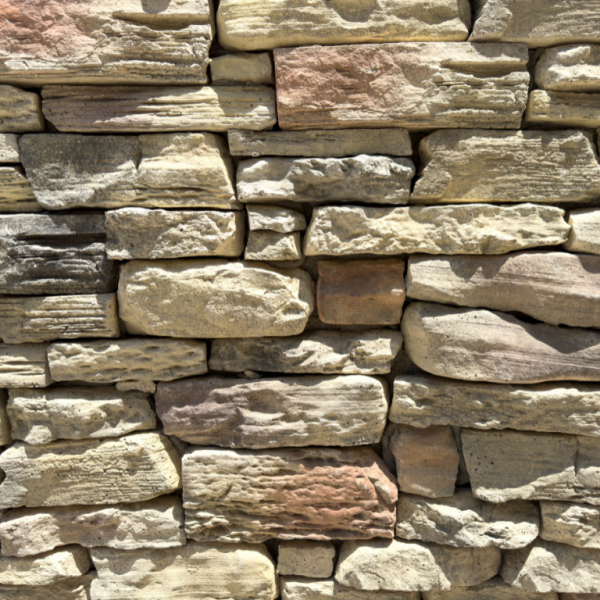
How Atlanta Masonry Crews Set Boulders for a Wall That Lasts Decades
Once the base trench and drainage system are in place, our crew sets each boulder with equipment. Every stone is angled back into the slope. That backward lean uses gravity to hold the wall tight against the earth behind it.
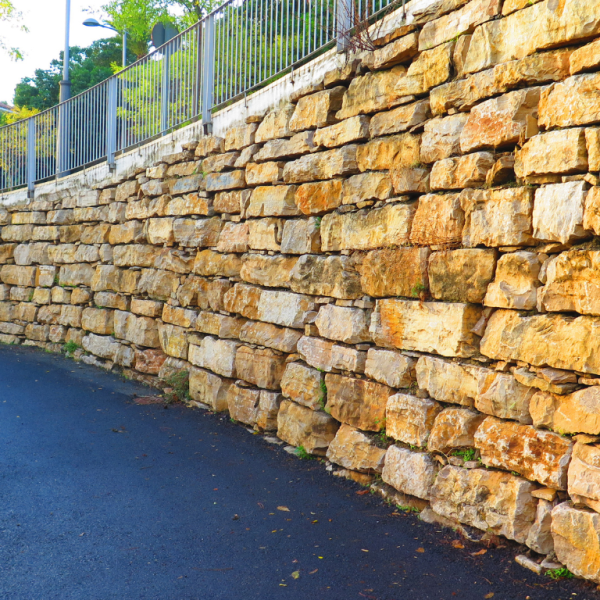
Placement Steps
- Larger boulders go at the base
- Each row steps back slightly to increase the gravity lock
- Our crew checks the angle and fit of every stone before moving to the next
Tight Lot Access in Atlanta Neighborhoods
In Midtown and Sandy Springs, many older neighborhoods have narrow lot lines.
We plan equipment access around tight spaces, fencing, and mature trees before the job starts.
That planning avoids yard damage and keeps the build on schedule
Spot the Early Signs of Retaining Wall Failure Before Damage Spreads
If you already have a boulder or block wall on your Atlanta property, watch for these three warning signs:
Why Atlanta’s Seasons Speed Up Wall Failure
- Dry summers: Clay shrinks and pulls away from the wall.
- Wet winters: Soil resaturates and pushes hard against it.
- That back-and-forth accelerates movement when drainage was skipped during the original install.
Catching these signs early often means a targeted repair instead of a full rebuild.
Frequently Asked Questions
Questions Homeowners Ask
Can boulders work as a retaining wall on my Atlanta hillside?
Yes — boulders handle most residential slopes in Atlanta. A site visit lets us confirm the right stone size and base depth for your specific grade and soil.
What goes behind a boulder retaining wall to stop water damage?
Gravel backfill, a perforated drain pipe, and landscape fabric between the soil and stone. These three layers give water a path out instead of letting it press against your wall.
How deep does the base need to be for a four-foot boulder wall in Atlanta?
About one-third of the wall’s visible height goes below grade. For a four-foot wall, that means roughly 16 inches of buried stone to anchor the structure.
What causes boulder retaining walls to fail?
Poor drainage is the leading cause. Trapped water builds pressure behind the stone and shifts boulders out of alignment over months or years.
How do I maintain a boulder retaining wall in Georgia’s climate?
Clear your drain outlets each spring. Check for leaning after heavy rain. Remove any root growth near the base before it pushes into the stone.
When is the best time to build a boulder retaining wall in Atlanta?
Late spring through fall gives you the driest ground conditions. Dry soil means better equipment access and stronger base compaction during the build.